I got lost in Manama once. Properly lost — wrong souq, wrong street, phone at 4%. I stopped a shopkeeper and asked for directions. He spoke Arabic. I spoke English. What followed was five minutes of pointing, gesturing, and passing my phone back and forth so Google Translate could do the talking neither of us could. That night was the reason I went looking for the best language exchange apps I could find.
He was patient about it. I wasn’t proud of it.
That was months into living here, and I still couldn’t hold a basic conversation in Arabic. That night I downloaded my first language exchange app. Not another Duolingo streak — I’d done that, and a green owl reminding me daily wasn’t the same as actually being able to order food or ask for directions. I wanted a real person on the other end.
So I tried over ten apps. Some were genuinely great. Some I deleted within a day. Here’s what actually worked. These turned out to be the best language exchange apps for anyone actually trying to speak, not just study.
Why the Best Language Exchange Apps Beat Traditional Learning Apps
Apps like Duolingo are excellent for building vocabulary and getting into a daily habit — the gamification works, and streaks keep you showing up. But there’s a ceiling. You can ace every lesson and still freeze up the first time a native speaker talks to you at normal speed.
Language exchange apps flip the approach. Instead of drilling flashcards, you’re talking — texting, voice notes, video calls — with someone who’s actually learning your language too. That trade-off matters:
- Real conversation practice, not scripted sentences
- Cultural context you don’t get from an app curriculum — slang, tone, what’s actually said versus what’s in the textbook
- Immediate correction from a human who catches the mistake a grammar-checking algorithm might miss
- Flexibility — text when you’re busy, call when you have time
Neither approach replaces the other. I still think structured apps are good for the first month or two. But if you actually want to speak, you need real conversations at some point. This is that point.
Top 5 Best Language Exchange Apps – My Picks
Here are the best language exchange apps I tested, ranked by what actually worked.
1. HelloTalk
What it does: Connects you with native speakers for text, voice, and video exchange, built around a social-feed style interface.
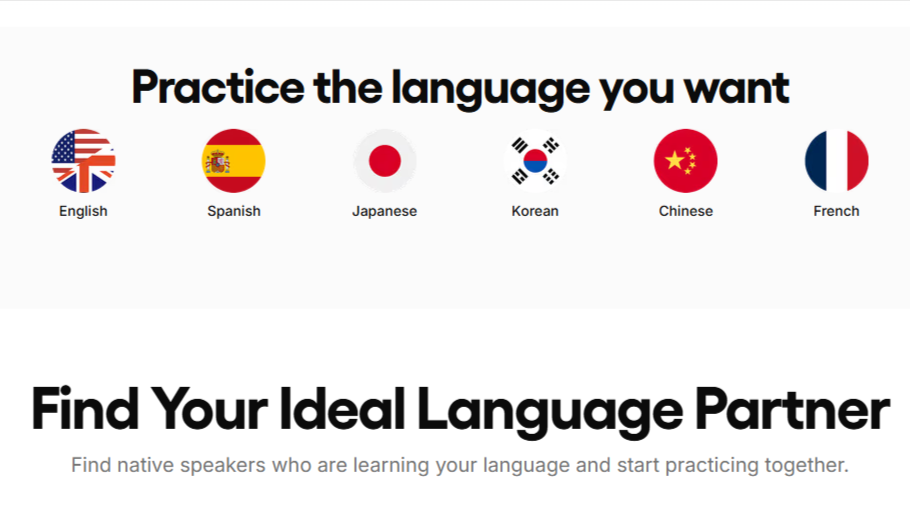
How it works: You set your native and target languages, and the app matches you with people learning the reverse pair. You chat, correct each other’s messages inline, and can jump to voice or video calls.
What I love: The correction feature is genuinely useful — you can mark up a partner’s message like a teacher would, and they do the same for you. The built-in translation and transliteration mean you’re never completely stuck.
What could be better: The free version gets you far, but message limits and some AI features sit behind the paid tier. It can also feel more like a social app than a study tool if you’re not disciplined about it.
Pricing: Free, with HelloTalk VIP starting around $12.99/month for unlimited translations and extra features.
AI features: Built-in translation, grammar correction, and a pronunciation trainer (SpeakUp AI) that scores how close you are to native pronunciation.
Best for: Anyone who wants daily texting practice with real people, not just a scheduled call once a week. HelloTalk remains one of the best language exchange apps for anyone who wants daily texting practice with real people.
2. Tandem
What it does: Similar premise to HelloTalk — native speaker matching — but leans more toward verified profiles and a slightly more professional, less “social media” feel.
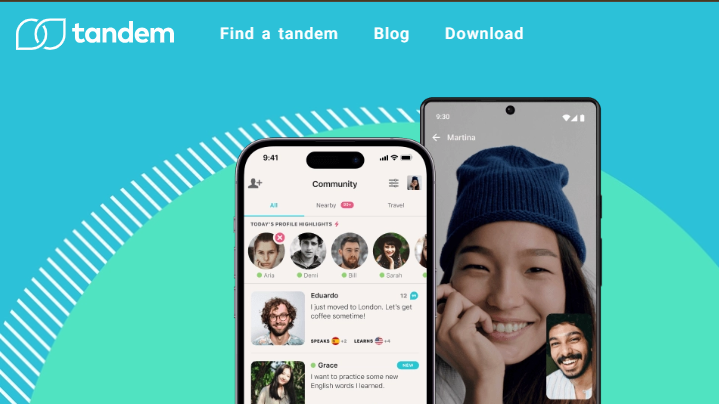
How it works: Match by language pair and interests, chat or video call, with built-in tools to correct messages and translate on the fly.
What I love: The verification system cuts down on the awkward “is this person actually here to learn a language” problem that dating-app-adjacent exchange apps sometimes have.
What could be better: The paid tier is a bit steep if you just want occasional practice, and the free version can feel slower to find good matches compared to HelloTalk’s larger user base.
Pricing: Free, with Tandem Pro around $18.99/month.
AI features: Real-time captions during video calls, which help a lot when someone’s speaking fast and your ear isn’t there yet.
Best for: People who want a more curated, less noisy exchange experience — good if you’ve been burned by low-effort matches elsewhere.
3. Speaky
What it does: A straightforward exchange platform built for instant text and voice chat with language partners.
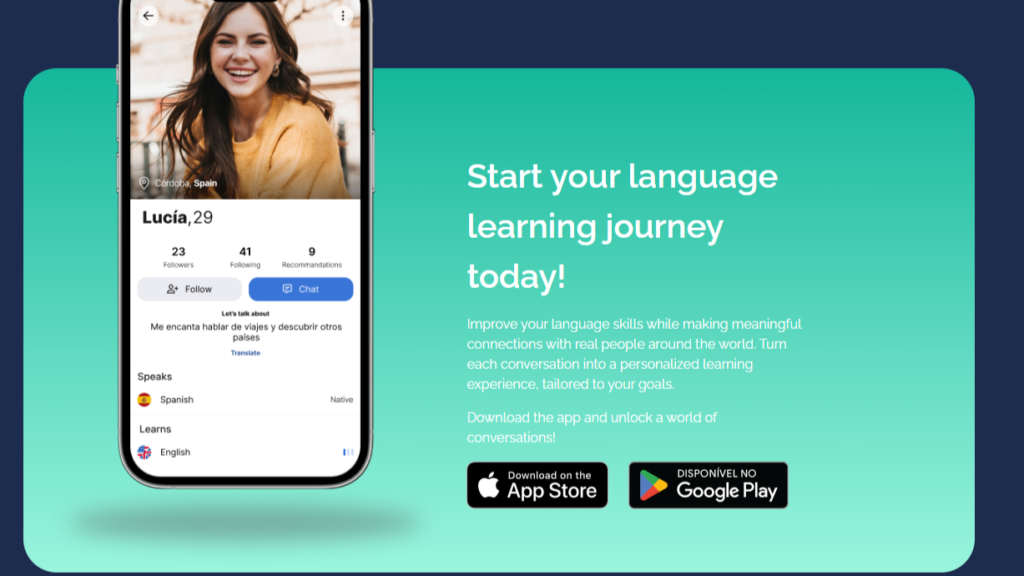
How it works: Browse or get matched with partners based on language and topics, then chat immediately — no long onboarding.
What I love: It’s fast. No waiting around for a “good match” algorithm — you can be in a conversation within minutes of signing up.
What could be better: No AI features to speak of, and the interface feels a little dated next to HelloTalk or Tandem.
Pricing: Free, with a premium upgrade for extra filters and ad removal.
AI features: None currently.
Best for: Beginners who just want to jump in and start talking without a complicated setup.
4. italki
What it does: Technically more tutoring platform than pure exchange app, but its community section functions as a genuine language exchange space alongside paid one-on-one lessons.
How it works: Join free community discussions, or book affordable sessions with tutors and community teachers for structured practice.
What I love: If you want the free-exchange model most days but occasionally want a professional to actually fix your grammar and pacing, italki lets you do both without switching apps.
What could be better: The core exchange community is smaller and less active than HelloTalk’s — most users are there for paid lessons, not free chat.
Pricing: Free community access; paid lessons are pay-per-session, priced by the tutor.
AI features: Tutor-matching based on your goals and proficiency level.
Best for: Learners who want the option to pay for real tutoring without abandoning free practice entirely.
5. HiNative
What it does: Less a chat app, more a Q&A platform — you post a specific question (“does this sentence sound natural?”) and native speakers answer.
How it works: Post text, or record yourself saying a phrase, and get feedback from natives of that language.
What I love: For the “I don’t need a conversation partner right now, I just need to know if this one sentence is right” moments, nothing else is faster.
What could be better: It’s not built for ongoing conversation practice — it’s a support tool, not a replacement for the other four.
Pricing: Free, with a premium tier around $5.99/month for faster answers and extra features.
AI features: None beyond the Q&A matching itself.
Best for: Quick clarification questions rather than sustained speaking practice.
Language Exchange Apps Comparison Table
Here’s a side-by-side look at the best language exchange apps I covered above.
| App | Best For | Price | Free Version | AI Features | My Rating |
|---|---|---|---|---|---|
| HelloTalk | Text/voice exchange | Free / ~$12.99/mo | Yes | Translation, grammar correction, pronunciation trainer | 4.5/5 |
| Tandem | Verified, curated matches | Free / ~$18.99/mo | Yes | Real-time captions | 4/5 |
| Speaky | Instant chat practice | Free / Premium upgrade | Yes | None | 4/5 |
| italki | Free community + paid tutoring | Pay per lesson | Yes (community) | Tutor matching | 4.5/5 |
| HiNative | Quick language questions | Free / ~$5.99/mo | Yes | Q&A format | 4/5 |
How to Choose the Right App for You
Not sure which of these best language exchange apps fits you? Here’s a quick breakdown.
- Want daily speaking practice? Start with HelloTalk or Speaky.
- Tired of low-effort matches? Tandem’s verification makes a real difference.
- Want structure with occasional free practice? italki covers both.
- Just need a quick sentence checked? HiNative, every time.
- On a tight budget? HelloTalk and Speaky’s free tiers genuinely hold up.
No matter your goal, one of these best language exchange apps should fit.
Mistakes I Made Using These Apps
Even with the best language exchange apps at hand, I made plenty of mistakes along the way.
Expecting overnight fluency. I thought a week of daily chats would get me conversational. It didn’t. Fluency depends on consistent practice and real-world use — no app can guarantee results, no matter how good the AI features are.
Only using one app. I stuck with HelloTalk for a month before realizing Tandem’s verified matches solved a problem I didn’t know I had — flaky partners who’d disappear mid-conversation.
Not practicing speaking out loud. Texting felt safe. Too safe. I avoided voice calls for weeks, and it showed the first time I actually had to speak Arabic out loud to that shopkeeper again (yes, I went back).
Ignoring cultural context. Grammar isn’t the whole language. My Tandem partner spent more time explaining when a phrase was rude versus polite than correcting my sentence structure, and that mattered more than I expected.
Frequently Asked Questions
What is the best language exchange app? It depends on what you need. HelloTalk is the strongest all-rounder for daily text and voice practice, while Tandem suits people who want more verified, higher-quality matches. It depends on what you need, but among the best language exchange apps, HelloTalk is the strongest all-rounder…
Are language exchange apps free? Most of the apps on this list have solid free versions — HelloTalk, Tandem, Speaky, and HiNative all let you start without paying. Paid tiers mostly remove limits or add extra AI features.
Which app is best for speaking practice specifically? HelloTalk and Speaky are built around getting you into conversations quickly, including voice and video.
Can I learn a language without paying anything? Yes. The free tiers of these apps are genuinely usable long-term, not just trial versions.
What is the safest app to use? Tandem’s verification process makes it the most consistent choice if safety and match quality are a priority.
Which of these is actually better than Duolingo for real conversation? All five, honestly — but HelloTalk and Tandem specifically, since they’re built around live conversation rather than lesson modules.
Final Thoughts
Duolingo is great for starting. The streaks, the gamification, the low-pressure daily habit — it gets you in the door. But if you actually want to speak, you need more. These apps changed how I learn, These are, hands down, the best language exchange apps I’ve used all year. and my Arabic, while still very much a work in progress, is in a completely different place than it was a year of Duolingo streaks ago.
If there’s one honest takeaway from testing every app on this list, it’s this: pick based on what you’re actually missing, not whichever app has the flashiest ad. Speaking practice, listening reps, real feedback — combine two of these and you’ll get further than any single app alone.
Which language exchange app are you going to try? Drop a comment below!