I went looking for apps for long distance couples — and then, because I can’t do anything halfway, I ended up testing basically every one I could get my hands on. Nineteen apps, two weeks, one very patient partner, and more notification pop-ups than my phone has ever survived.
This is everything I learned. Some of these apps for long distance couples earned a permanent spot on our home screens. A few got deleted within a day.
One completely changed how we handle the time difference. If you’re hunting for the best apps for long distance couples that hold up past the first week of excitement, here’s my honest breakdown.
How I Tested These Apps for Long Distance Couples
I split testing across two phones — my iPhone and my partner’s Android — because plenty of relationship apps still feel like an afterthought on one platform or the other. That mismatch alone kills a promising app before it even gets a fair shot.
Every app got a minimum of three days of real use with my actual partner, not a solo click-through or a demo account. Anything shorter than that and you’re just reviewing the onboarding screens, not the app itself.
For each one, I tracked the same things: how fast we figured it out without a tutorial, which features we actually kept using versus which ones just sat there, what it cost once the free trial ended, and — the only metric that really mattered — whether we felt closer after a week of using it.
That last point ended up mattering more than any feature list. Plenty of apps for long distance couples look great in the App Store screenshots and then just sit there, unopened, by day four.
Best Apps for Long Distance Couples – By Category
I split everything into five buckets, because no single app category could cover all of it.
(Search around and you’ll see the same hunt called long-distance relationship apps, LDR apps, couple apps for distance, or apps for couples apart — it’s all the same list.)
Communication, daily rituals, shared fun, planning, and the deeper relationship work all need different tools. Trying to make one app do everything is exactly how you end up frustrated with all of them.
Communication Apps
These are the ones doing the daily heavy lifting — the texts, the calls, the “just landed” messages. It might take a little trial and error at first, but finding a setup that fits your daily flow is the real secret when testing new apps for long distance couples.
- What It Does: Cross-platform texting, voice notes, and video calls that work over Wi-Fi or data, pretty much anywhere in the world.
- What I Love: It just works, everywhere, on every network we’ve thrown at it. Voice notes became our go-to for bridging the time zone gap when a real-time call wasn’t possible.
- What Could Be Better: Zero features built specifically for couples — it’s a general messaging app doing a relationship app’s job.
- Pricing: Free.
- Best For: The reliable daily baseline almost every long-distance couple ends up using anyway.
Sometimes you just need a straightforward text, and that is exactly why basic messengers remain the foundation of all apps for long distance couples.
Telegram
- What It Does: Cloud-based messaging with generous file-size limits, stickers, and chat history that syncs across every device you own.
- What I Love: I could send full-quality videos without the compression that mangles them on other apps, and switching from phone to laptop mid-conversation felt seamless.
- What Could Be Better: Regular chats aren’t end-to-end encrypted by default — you have to specifically start a “Secret Chat” for that, and most couples never do.
- Pricing: Free, with an optional Premium tier around $4–5/month for bigger uploads and extra features.
- Best For: Couples who send a lot of photos and video and want everything backed up automatically.
Signal
- What It Does: Messaging and calls that are end-to-end encrypted by default, every time, with no toggle required.
- What I Love: Not having to think about privacy at all — it’s just on. The interface is clean and boring in the best way. (I’ve got a full Signal vs. Telegram breakdown if you want the deep dive on encryption specifically.)
- What Could Be Better: No cloud backup by design, so losing your phone means losing your message history. Learned that one the hard way.
- Pricing: Free.
- Best For: Couples who want privacy handled automatically instead of as an opt-in setting.
Having strong privacy features built right in is a massive bonus when you are sharing personal moments through apps for long distance couples.
Marco Polo
- What It Does: Asynchronous video messaging — you record a video whenever, they watch and reply whenever, no scheduling required.
- What I Love: Actually seeing my partner’s face and hearing their voice without needing our schedules to line up made the time difference feel smaller.
- What Could Be Better: The price has climbed a lot over the years, and features that used to be free got moved behind the paywall.
- Pricing: Free core app; Plus runs roughly $10/month or $75–120/year depending on the plan.
- Best For: Couples across time zones who miss face-to-face contact but can never sync schedules for an actual call.
Connection & Ritual Apps
This is the category built specifically for us — daily habits designed to manufacture the closeness distance keeps trying to steal.
Paired
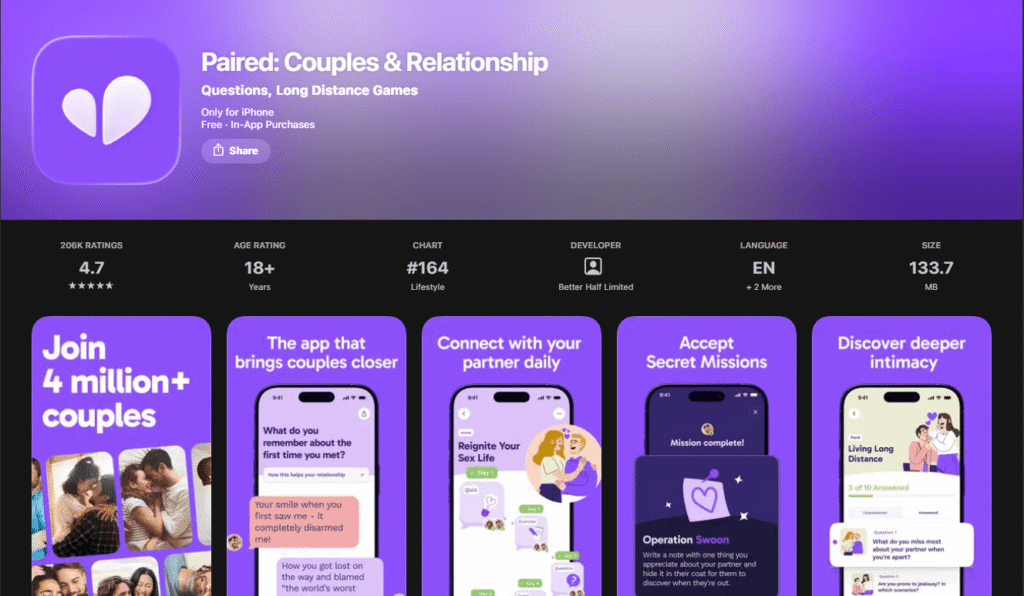
- What It Does: Sends both partners a daily question to answer independently, then reveals both answers together, plus quizzes and games.
- What I Love: Five minutes a day, asynchronous by design, so time zones stop being a problem. One subscription covers both of us, which I appreciated.
- What Could Be Better: It won’t resolve an actual disagreement — it’s built for connection, not conflict, and I made the mistake of expecting more than that at first.
- Pricing: Free tier available; Premium runs about $14.99/month or $70–84/year for the couple.
- Best For: Couples who want a low-effort daily ritual that doesn’t depend on both of you being free at the same time.
Between
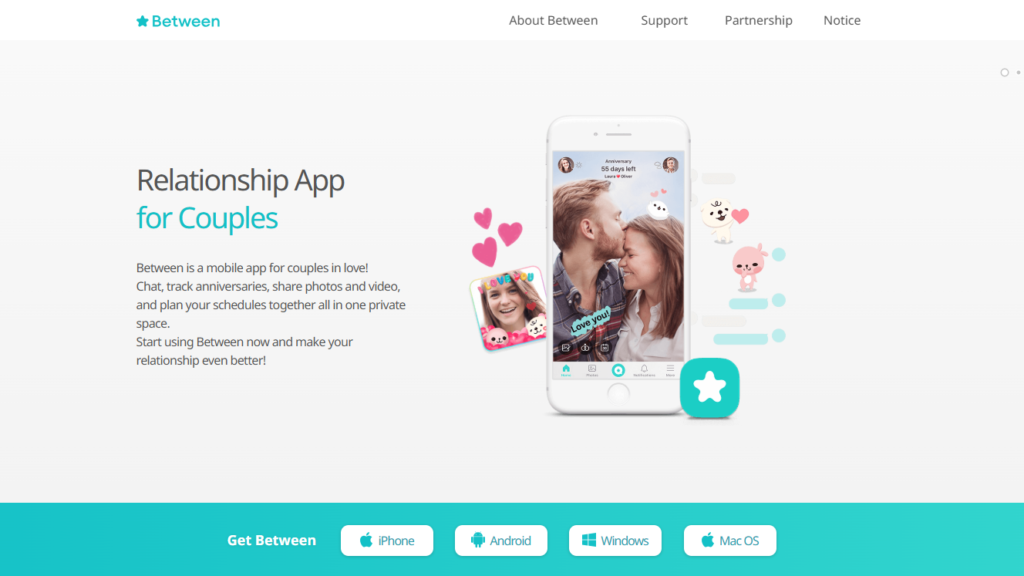
- What It Does: A private messaging space plus a shared photo and memory timeline, separate from your regular texting app.
- What I Love: Scrolling back through our timeline on a rough night was genuinely comforting.
- What Could Be Better: It feels a little basic next to some of the newer relationship apps that have caught up on features.
- Pricing: Free tier; premium runs roughly $3–6/month depending on where you check.
- Best For: Couples who want a private archive of the relationship, kept separate from everyday group chats and work messages.
Amora
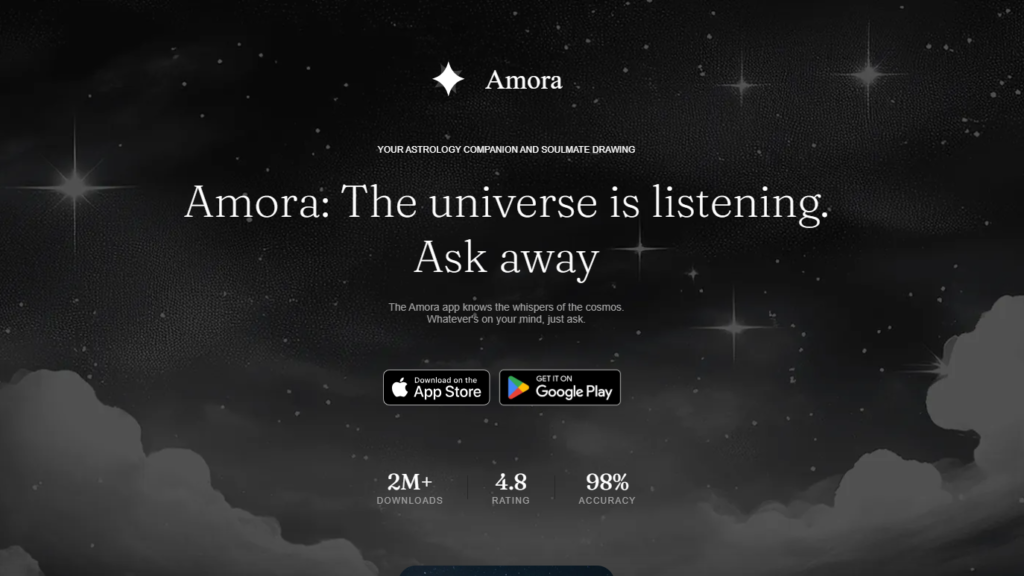
- What It Does: Daily questions, a shared private journal, and 24-hour photo “stories” you send back and forth.
- What I Love: The free tier is genuinely generous, and one subscription unlocks Pro for both partners — no arguing over who pays.
- What Could Be Better: It’s explicitly not a therapy tool, so don’t expect it to help during an actual fight.
- Pricing: Free to download; Pro is about $4.99/week or $59.99/year, covering both of you.
- Best For: Couples who want the daily-question format combined with a shared journal in one place.
Love Nudge
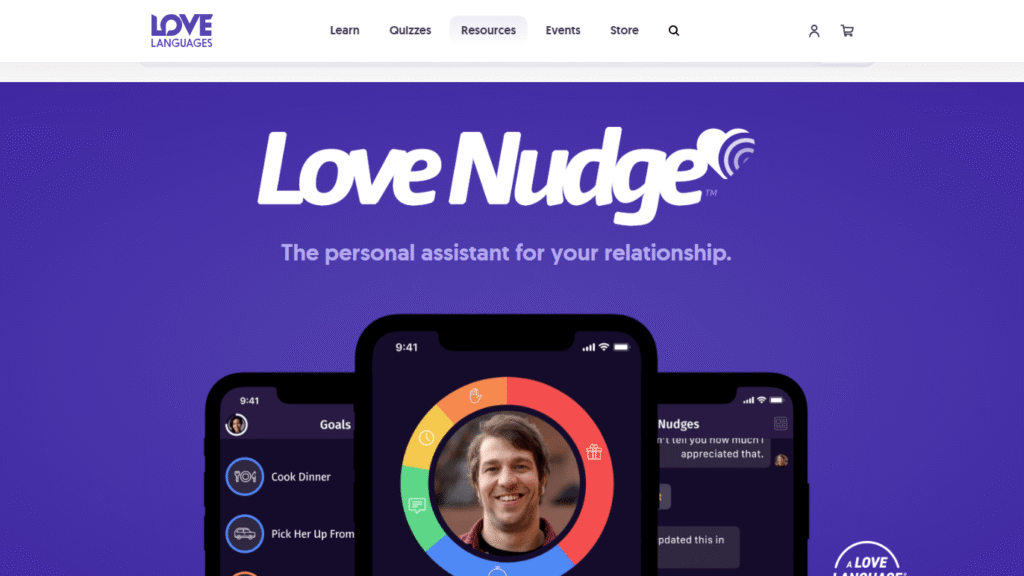
- What It Does: Built around Gary Chapman’s 5 Love Languages — you learn each other’s love language, send “nudges,” and track each other’s “love tank.”
- What I Love: It’s completely free, and the framework genuinely gave us language for things we’d never quite articulated before.
- What Could Be Better: The interface feels a bit dated, and it needs a steady connection to work properly.
- Pricing: Free, with optional in-app purchases.
- Best For: Couples who’ve read (or want to try) The 5 Love Languages and want a simple daily way to apply it.
Learning how your partner feels loved is crucial, and that is where psychology-based tools stand out among apps for long distance couples.
Shared Activity Apps
Because “how was your day” gets old fast, and you need actual things to do together.
Teleparty

- What It Does: Syncs video playback across Netflix, Disney+, Hulu, Max, and Prime Video, with a chat sidebar for reactions in real time.
- What I Love: Movie night actually feels like movie night, reaction chat and all.
- What Could Be Better: Sync glitches happen more often than I’d like, especially around ad breaks on ad-supported plans.
- Pricing: Free for the core streaming services; Premium unlocks more platforms plus voice and video chat.
- Best For: Couples who want a proper weekly movie or show night without a screen-share workaround.
Having a dedicated virtual movie night makes a huge difference, which is why watch-party features are easily a favorite among apps for long distance couples.
Rave
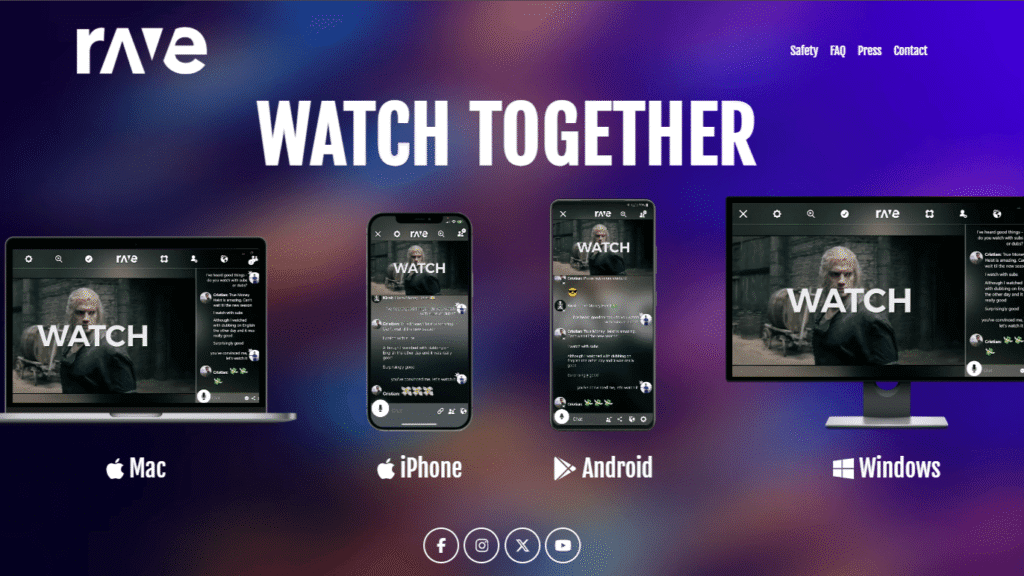
- What It Does: A mobile-first watch party app with voice and text chat built right in, syncing Netflix, Disney+, Prime, Max, and YouTube.
- What I Love: No browser extension needed — we could start a watch party from our phones in under a minute.
- What Could Be Better: The free version runs ads, and streaming quality dips a bit when either connection is weak.
- Pricing: Free with in-app purchases to remove ads.
- Best For: Spontaneous, phone-based movie nights when one or both of you are mostly on mobile.
GamePigeon
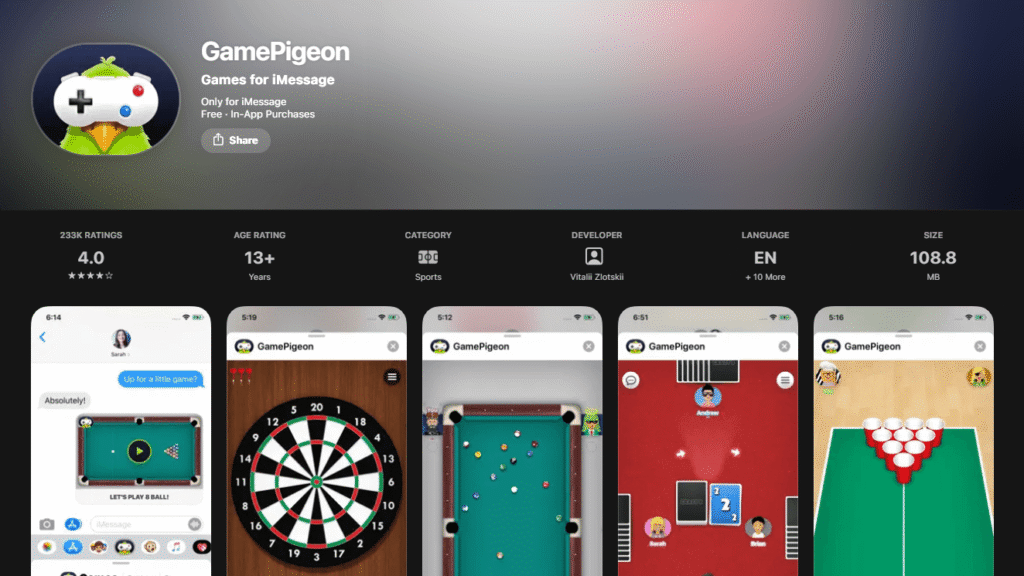
- What It Does: A pack of mini-games — 8-ball, chess, word games, and more — playable directly inside iMessage.
- What I Love: Zero setup. You send a game turn the same way you’d send a text, and it became our go-to way to flirt-compete across the distance.
- What Could Be Better: iMessage and iOS only — a dealbreaker the second either of you is on Android.
- Pricing: Free.
- Best For: iPhone couples who want quick, low-stakes games without downloading a separate app.
Playing quick games over text breaks the ice effortlessly, proving that not all apps for long distance couples need to be complicated.
Spotify
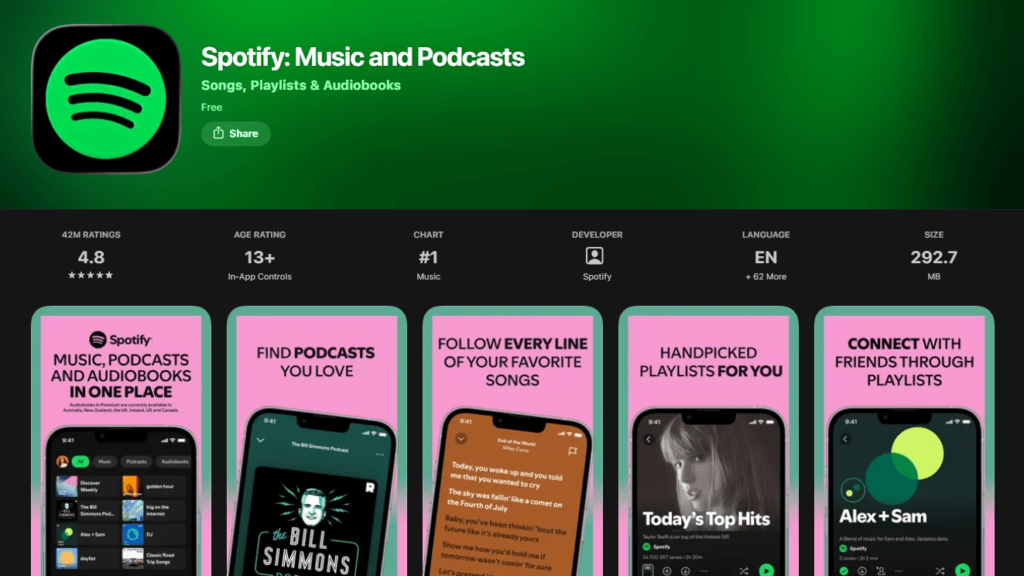
- What It Does: Music streaming with collaborative and shared playlists, plus real-time group listening sessions.
- What I Love: Building a shared playlist over months turned into its own little timeline of our relationship — I didn’t expect that to matter as much as it does.
- What Could Be Better: Real-time shared listening can get choppy over a weak connection.
- Pricing: Free with ads; Premium is about $11.99/month, with family or duo plans available.
- Best For: Couples who bond over music and want a low-pressure “together” activity that doesn’t need anyone’s full attention.
Music has a unique way of bridging the gap, making collaborative playlists one of the most underrated features in apps for long distance couples.
Planning & Countdown Apps
The unglamorous stuff — flights, time zones, and the number of days until you’re in the same room again — matters more than any of the fun apps. (If setting up shared calendars across time zones sounds like its own headache, I actually wrote a separate post just on that.)
Raft
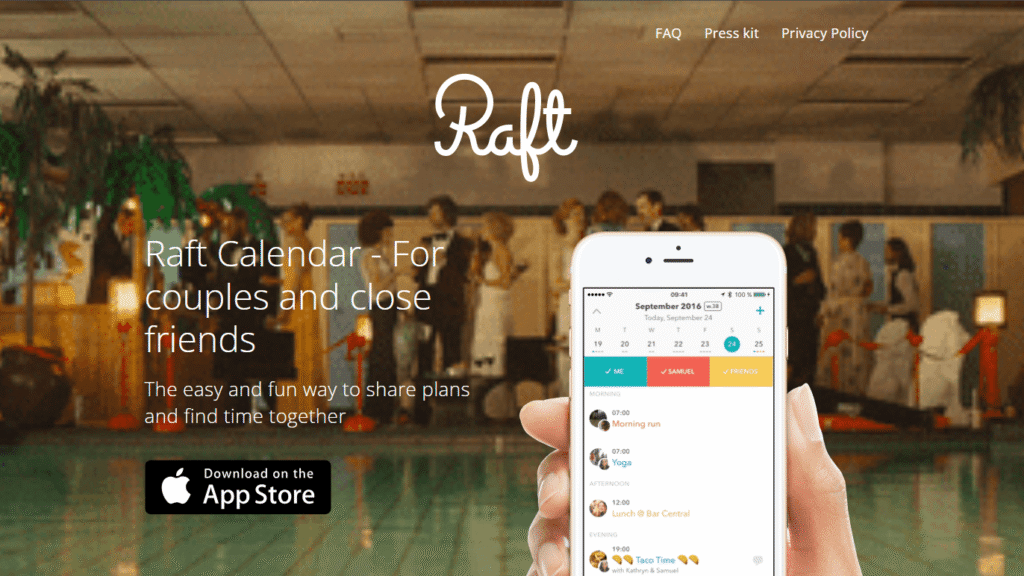
- What It Does: A shared calendar app for couples, friends, and family that syncs with your phone’s calendar and lets you add GIFs and images to events.
- What I Love: Planning a visit stopped feeling like admin work and started feeling like something we were building together.
- What Could Be Better: It feels iOS-first — my partner’s Android experience lagged behind mine in a few spots.
- Pricing: Free.
- Best For: Coordinating calls, visits, and countdowns without a messy back-and-forth of texts.
Keeping a shared countdown widget on your home screen is honestly one of the most practical features offered by planning apps for long distance couples.
Lovedays
- What It Does: A “D-Day” counter and home-screen widget that tracks how long you’ve been together and counts down to your next visit or anniversary.
- What I Love: Glancing at that widget every morning gives an honestly satisfying little hit of “we’re getting closer.”
- What Could Be Better: The full feature set is locked behind a subscription — monthly, yearly, or lifetime.
- Pricing: Free core features; paid unlock for the rest.
- Best For: Anyone who wants a constant visual reminder of how many days until the next reunion.
Countdown Apps
- What It Does: Simple widget-style apps that count down to one specific date — your next flight, your next visit, an anniversary.
- What I Love: No account, no setup, no learning curve. You pick a date and it just counts.
- What Could Be Better: Most are extremely bare-bones and ad-heavy unless you pay to remove the ads.
- Pricing: Free with ads; small fee or subscription to go ad-free.
- Best For: A no-frills widget that keeps your next reunion visible on your home screen without opening an app.
Google Calendar
- What It Does: A shared calendar you can both edit, with built-in time zone conversion.
- What I Love: It’s already installed on both our phones, it’s free, and the time zone conversion has saved us from at least a dozen “wait, is it your morning or mine?” mix-ups.
- What Could Be Better: It’s not built with couples in mind, so it has zero emotional or fun touches — it’s purely functional.
- Pricing: Free.
- Best For: The practical backbone of scheduling calls and visits across time zones.
Keeping track of each other’s schedules takes the guesswork out of calling, showing how utility tools double as great apps for long distance couples.
Intimacy & Growth Apps
These are the ones that go deeper than daily check-ins and actually work on the relationship itself. Even if you only spend five minutes a day on conversation prompts, prioritizing deeper connection is what truly sets great apps for long distance couples apart.
Gottman Card Decks
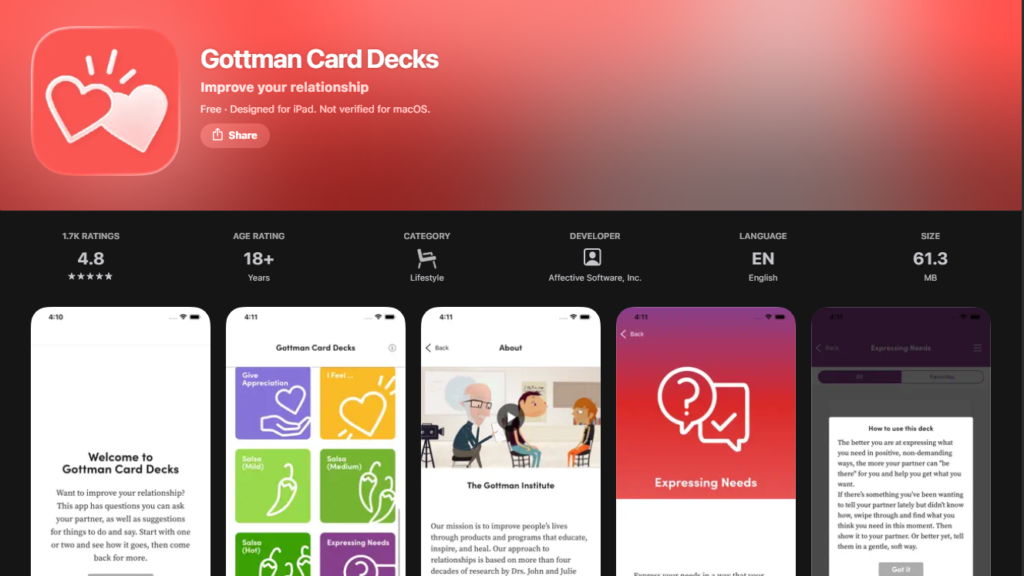
- What It Does: A free app from The Gottman Institute with 22 card decks and over 1,000 conversation prompts, built on decades of relationship research.
- What I Love: It’s completely free, and the questions are genuinely well-researched instead of generic “get to know you” filler.
- What Could Be Better: No messaging or chat features — it’s just the cards, so you’ll still need something else for daily contact.
- Pricing: Free.
- Best For: Couples who want research-backed conversation starters, including a deck focused specifically on deepening intimacy, without paying anything.
Lasting
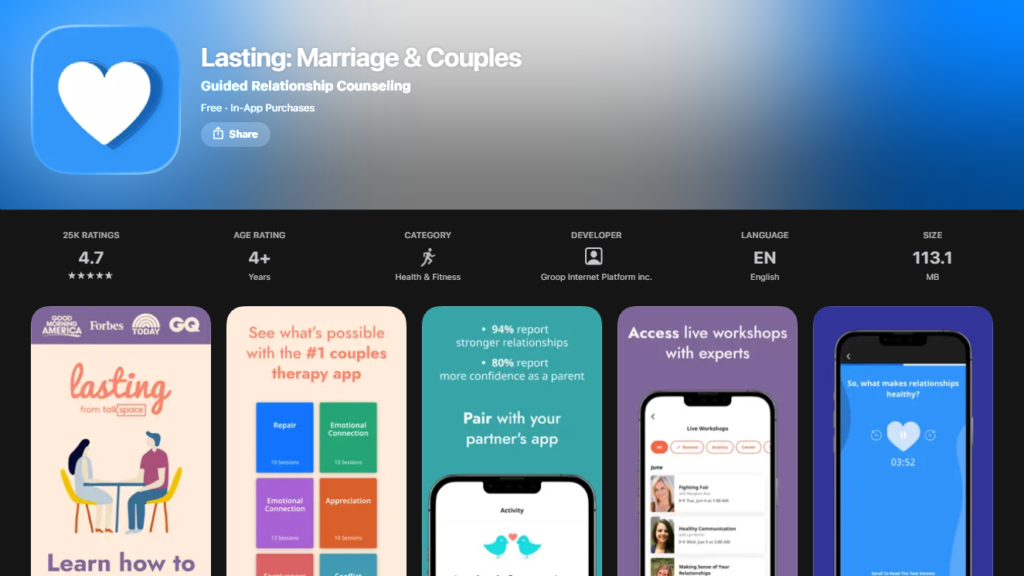
- What It Does: A therapy-style app with guided audio sessions on communication, conflict, and intimacy, built with input from licensed therapists.
- What I Love: It’s the closest thing to real counseling I’ve found in app form — the programs actually build toward something.
- What Could Be Better: By far the most expensive app on this list, and that price gap is real.
- Pricing: Free intro sessions; full access runs around $29.99/month or roughly $90 for six months.
- Best For: Couples ready to do structured, therapist-informed work on a specific issue, not just daily small talk.
Couply
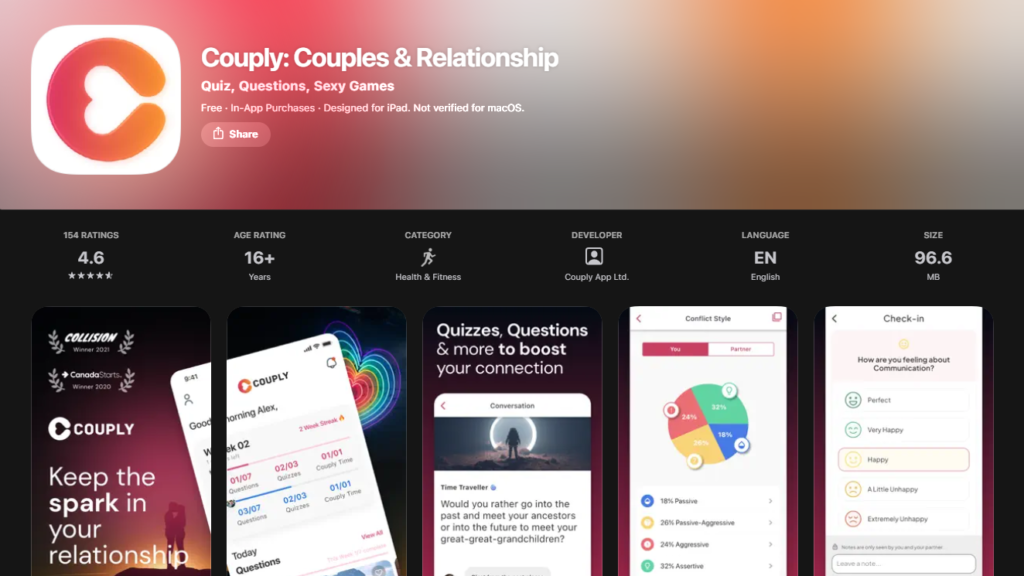
- What It Does: Personality quizzes, daily conversation cards, topic-specific conversation packs, and a dedicated Long Distance mode built for couples in our exact situation.
- What I Love: That Long Distance mode. It’s rare to find an app that built something specifically for the situation we’re actually in.
- What Could Be Better: It pushes the premium upgrade pretty hard, and the free tier starts to feel limited after a few weeks.
- Pricing: Free tier available; Premium is about $69.99/year, covering both partners.
- Best For: Long-distance couples specifically, thanks to that dedicated LDR mode.
Free vs Paid Apps for Long Distance Couples – Comparison Table
A handful of these cost nothing and never ask for a card: WhatsApp, Signal, GamePigeon, Raft, Google Calendar, and Gottman Card Decks all stayed completely free through two weeks of heavy use. If your budget is zero, start there.
For everything else, here’s how the free and paid tiers actually compare:
| App | Free Tier Gets You | Paid Tier Costs | Worth Upgrading? |
|---|---|---|---|
| Telegram | Full core messaging | ~$4–5/month | Only if you hit upload limits |
| Marco Polo | Core video messaging | ~$10/month or $75–120/year | Only if you’re sending videos daily |
| Paired | Daily question, basic games | ~$14.99/month or $70–84/year (couple) | Yes, if you’ll actually open it daily |
| Between | Messaging, photo timeline | ~$3–6/month | Only if the free version feels cramped |
| Amora | Journal, stories, daily question | ~$4.99/week or $59.99/year (couple) | Try free first — most don’t need to upgrade right away |
| Love Nudge | Everything core | Optional in-app purchase | Skip it, the free tier covers it |
| Teleparty | Netflix, YouTube, Disney+, Max, Prime | Unlocks more platforms + voice/video chat | Only if you watch a lot outside the core apps |
| Rave | Everything, with ads | Removes ads | Nice-to-have, not essential |
| Spotify | Music with ads, limited skips | ~$11.99/month | Worth it for uninterrupted shared listening |
| Lovedays | Basic counter and widget | Monthly, yearly, or lifetime unlock | Lifetime pays for itself fast if you actually use the widget |
| Countdown apps | Core countdown, with ads | Small fee removes ads | Only if the ads genuinely bother you |
| Lasting | Free intro sessions | ~$29.99/month or ~$90/6 months | Only for couples ready for real structured work |
| Couply | Quizzes, some daily content | ~$69.99/year (covers both) | Worth it if you’re both actually opening the app |
Prices shift constantly, so don’t hold me to these exact numbers — always double-check inside the app before you commit. The pattern held up across almost everything I tested, though: the free tier is usually enough to know if an app is worth your time before you pay for anything.You don’t need to break the bank either, as many of the highest-rated apps for long distance couples offer completely free base versions that get the job done.
Mistakes I Made When Choosing Apps for Long Distance Couples
At the end of the day, downloading half a dozen platforms at once only causes notification fatigue, so stick to two or three reliable apps for long distance couples.
Mistake 1: I downloaded too many apps at once
I hit six apps for long distance couples in the first week alone, and my partner’s phone turned into a graveyard of notification badges neither of us ever cleared. Pick two or three and actually commit before adding a fourth.
Mistake 2: I didn’t check time zone and country compatibility first
One app I was excited about turned out to have half its features geo-locked in my partner’s country. I’d already written half a review in my head before I found out it wasn’t fully usable on their end.
Check both app stores, in both countries, before you get attached to anything.
Mistake 3: I ignored the free tier limitations
I assumed a couple of these apps were “basically free” and only found the real paywall after we were three weeks into a daily habit — right when canceling felt like giving up the routine. Read what’s actually free before you build a habit around it.
Mistake 4: I didn’t involve my partner in the decision
I picked the first two apps solo and just sent my partner the download links. They used them because I asked, not because they wanted to, and it showed.
The apps that actually stuck were the ones we picked together after both trying the free versions.
Frequently Asked Questions (FAQs)
What are the best apps for long distance couples?
It depends on what you need — whether you call them apps for long distance couples or apps for long distance relationships, the answer is similar. After testing nineteen of them, my honest go-to combo is Signal or WhatsApp for daily communication, Paired or Couply for a connection ritual, Teleparty or Rave for movie nights, and Google Calendar or Raft for planning visits. That’s four separate apps, not one — no single app does everything well. Consistency always beats novelty, so focus on choosing the apps for long distance couples that both of you will actually enjoy opening every single morning.
Which app for long distance couples is free?
Several are entirely free with no paid tier at all: WhatsApp, Signal, GamePigeon, Raft, Google Calendar, and Gottman Card Decks. Love Nudge is also free, with only optional in-app purchases.
Is Paired better than Between?
They’re not really doing the same job, so “better” depends on what’s missing from your routine. Paired is a structured daily ritual — a question, a quiz, a game — while Between is more of a private messaging space with a photo and memory archive.
We used both for a while, for different reasons, before settling on Paired as the one that stuck.
How many apps for long distance couples should I use?
Based on my own mistake of downloading six at once, I’d say three or four, max — one for communication, one for daily connection, one for shared activities, and maybe one for planning. Any more than that and you’ll both stop opening most of them within a month.
Which app for long distance couples is best for communication?
WhatsApp for daily reliability across pretty much any country or network, Signal if privacy is your top priority, and Marco Polo specifically for bridging awkward time zones with video instead of text.
Are there apps for long distance couples that help with intimacy?
Yes. Gottman Card Decks is free and includes a deck specifically built around deepening intimate connection through conversation. Lasting goes further with structured, therapist-informed sessions, and Couply’s Long Distance mode includes conversation packs built for exactly this.
Do these apps actually work, or is it just hype?
They work if you both actually use them — that’s the honest answer. The app matters less than the habit.
Every app on this list that we still use today is one we both opened without being nagged into it. Every one we deleted was an app only I cared about.
So, Which Apps for Long Distance Couples Are Actually Worth It?
After testing all these apps for long distance couples, here’s what I learned: the ones that stuck weren’t the flashiest ones. They were the boring, reliable ones we actually opened every single day — Signal for texting, Paired for our daily question, Teleparty for Sunday movie nights, and Google Calendar quietly running in the background of all of it.
A few of the more ambitious apps got deleted within days. Not because they were bad, but because they asked for more effort than either of us had left after a full day of texting across a nine-hour gap.
That’s the real lesson here — the best long-distance relationship apps aren’t the ones with the most features. They’re the ones you’ll still be opening in six months.
Which app for long distance couples do you use? Drop a comment below — I’d love to hear your experience!
Also Read: Best Apps for Editing Photos in 2026