
Okay, real talk. I used Character AI for months. It was genuinely fun for a while — I had a couple of ongoing story threads I actually looked forward to picking back up.
Then things shifted. Responses got flatter. Conversations that used to flow started getting cut off mid-scene with a canned warning. Full-screen ads started popping up between messages, which is a wild thing to experience when you’re in the middle of an emotional plot beat with a character. That’s the exact moment I started looking for a character AI alternative, and honestly, once I started digging, I realized I wasn’t the only one.

So I spent the last few months actually using ten different platforms — not just skimming their homepages. I made characters, I broke a few free tiers, I paid for a couple of subscriptions I probably didn’t need, and I kept notes the whole time. This is everything I found, the good and the genuinely annoying.
If you’re hunting for a character AI alternative yourself, here’s my full, unfiltered ranking.
Why Look for a Character AI Alternative?
A few things pushed me (and a lot of other users, based on the threads I’ve read) toward trying something new:
- Character AI has gotten more restrictive over time. Filters trigger more often, and they interrupt scenes that used to be totally fine.
- People want more customization. Deeper lorebooks, memory that actually holds, and characters that don’t reset personality every ten messages.
- The ad rollout stung. Full-screen ads inside chats are a rough experience, and it’s a big reason so many users started actively searching for a character AI alternative instead of just grumbling about it.
- The overall vibe has cooled. It’s still huge, but the “everyone’s obsessed with it” energy from a couple of years ago has faded, and that gap is exactly what these alternatives are filling.
None of this means Character AI is bad. It’s just not the only game in town anymore, and depending on what you want, it might not even be the best one for you.
My Top 10 Character AI Alternatives
I ranked these based on actual hands-on time, not marketing copy. A couple of notes before you dive in: several of these platforms allow mature or NSFW content in addition to regular roleplay, and every single one of them requires you to be an adult (usually 18, sometimes 17 with restrictions) to access that side of things. If you’re not there yet, stick to the SFW modes or the family-friendly picks lower down this list.
1. SillyTavern — Best for Advanced Customization
What it does: SillyTavern isn’t really an app with its own AI — it’s a free, open-source front end that connects to whatever language model you want (Claude, GPT, Gemini, local models through KoboldCPP, you name it). You bring the brain; SillyTavern handles character cards, lorebooks, memory, and group chats.
What I love: The control is unmatched. I built a lorebook for one of my characters with locations, backstory, and relationship dynamics, and it actually stayed consistent across a fifty-message conversation. That’s rare.
What could be better: The setup is genuinely intimidating if you’re not technical. I spent an evening just getting my API keys configured correctly.
Pricing: Free. You only pay if you connect a paid model API — running it against a local model costs nothing at all.
Best for: Power users who want total control and don’t mind a learning curve. If you want a character AI alternative that treats you like an adult who can configure their own settings, this is it.
2. Poe (by Quora) — Best for Access to Multiple AI Models
What it does: Poe puts dozens of AI models — Claude, GPT, Gemini, Grok, and a growing pile of user-built bots — behind one subscription and one clean interface.
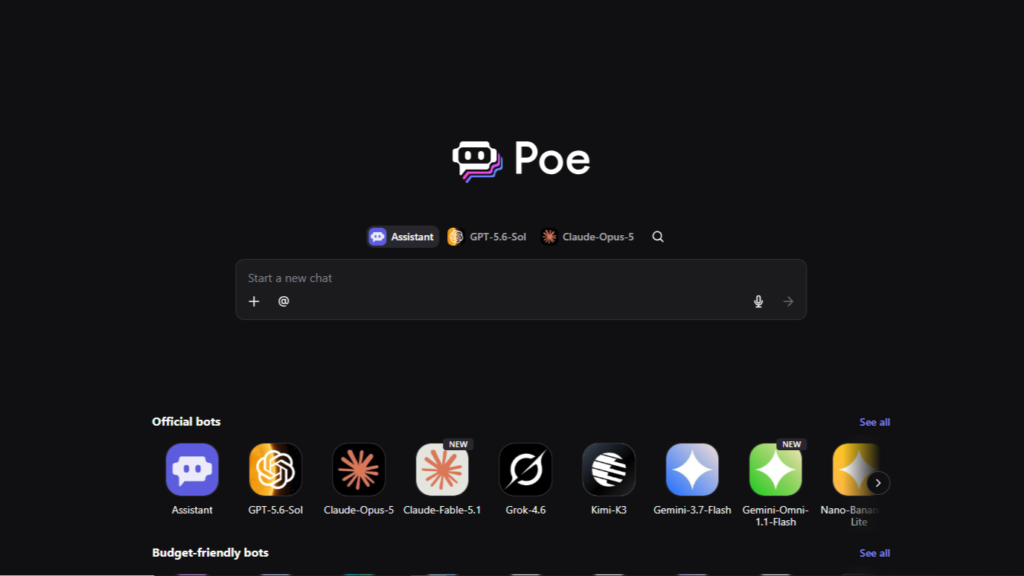
What I love: Being able to switch models mid-conversation when one isn’t giving me what I want is genuinely useful, not just a gimmick. The app works well across phone, desktop, and web.
What could be better: It runs on a points system, and frontier or video models chew through points fast. I burned through my monthly allotment faster than I expected.
Pricing: Free tier with a daily points allowance; paid plans run from around $5/month up to $250/month for heavy users, with a few tiers in between depending on how much model access you want.
Best for: Anyone who wants a character AI alternative that isn’t locked to a single company’s model — this is more of a Swiss Army knife than a dedicated roleplay app.
3. Chai — Best for Mobile Users
What it does: Chai is a swipe-heavy, mobile-first chatbot app with over 500,000 community-made characters. The vibe is closer to a dating app than a chat app — you browse, you tap, you’re talking.

What I love: Zero setup friction. I was chatting within thirty seconds of opening the app for the first time.
What could be better: The free tier is stingy (roughly 70 messages every couple of hours), and the premium price felt steep compared to what I got for it.
Pricing: Free with tight message limits; premium runs around $13.99–$29.99/month depending on your plan and region.
Best for: People who live on their phone and want the most frictionless character AI alternative on this list. It does allow mature content for adult users, with age-gating in place.
Mobile subscriptions are standard now, much like the broader app economy where developers look for ways to make money with apps through freemium tiers.
4. SpicyChat — Best for Fewer Content Restrictions
What it does: SpicyChat is built around user-created characters and a much looser content policy than mainstream platforms, once you enable its mature mode.
What I love: The character library is enormous — over 300,000 community characters — so I genuinely never ran out of things to try.
What could be better: Response quality varies a lot depending on which character (and which underlying model) you’re talking to. Some are great, some are noticeably weaker.
Pricing: Generous free tier; paid plans range from about $14.95 to $24.95/month, with a cheaper annual option.
Best for: Adult users specifically looking for a character AI alternative with fewer content guardrails. Worth saying plainly: this is an 18+ mode, and it’s on you to keep it that way.
Content Disclaimer: SpicyChat features user-created content with optional mature or 18+ modes. Access to adult features requires age-verification and is intended strictly for users 18 and older. This review is for informational and comparison purposes only.
5. Janitor AI — Best for Roleplay and Character Creation
What it does: Janitor AI lets you build deeply customized characters and connect your own API key (OpenAI, Claude, DeepSeek, and more) to power the conversation quality.
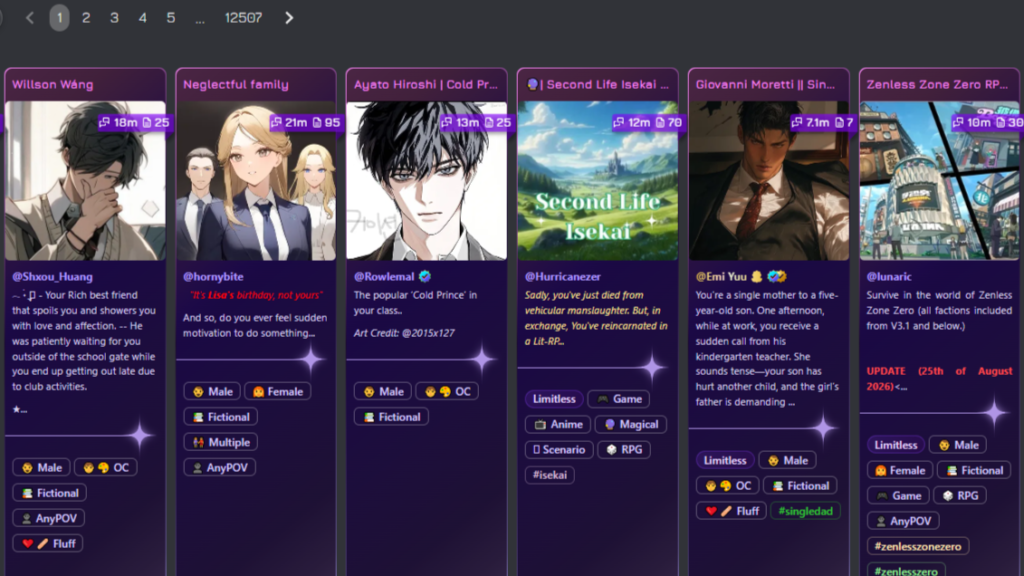
What I love: The character creation tools are some of the most detailed I tested — personality, scenario, example dialogue, custom greetings, the works.
What could be better: The built-in free model is genuinely weak on its own; you’ll want to attach your own API key to get good results, which adds cost and setup. The platform also went through a rocky ID-verification rollout in late 2025 that frustrated a lot of long-time users, and its uptime has been inconsistent.
Pricing: Free to use with the built-in model; Pro runs about $9.99/month, though you’ll likely also pay separately for whatever API you connect.
Best for: Roleplay fans who want deep character customization and don’t mind a bit of technical setup. It’s one of the most talked-about character AI alternatives in this space for a reason, but go in with realistic expectations about stability.
6. Talefy — Best for Storytelling
What it does: Talefy flips the format. Instead of an open-ended chat, it’s a choice-driven interactive story — the AI writes a scene, gives you a handful of options (or lets you type your own action), and generates an illustration to go with it.
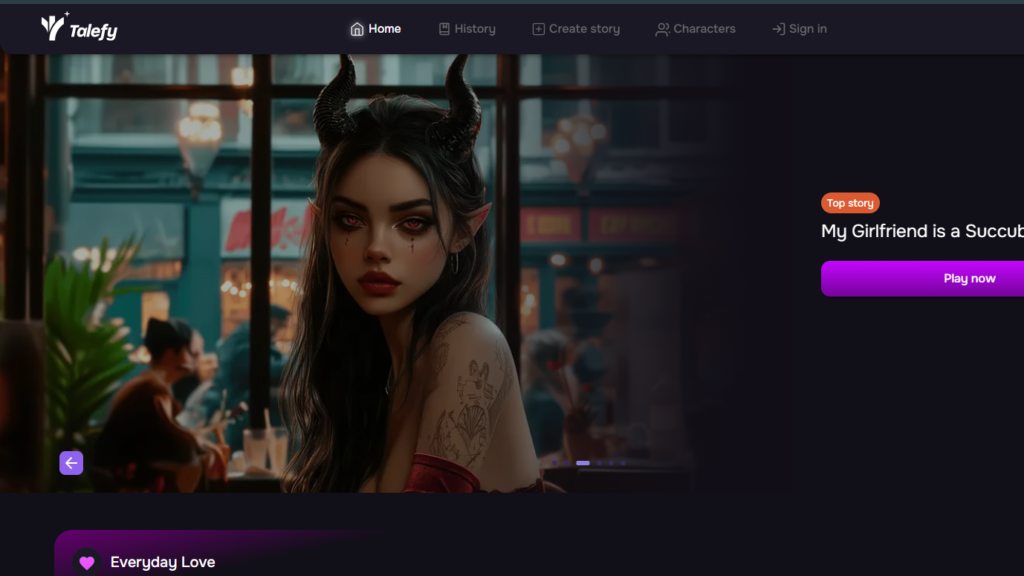
What I love: It genuinely feels like reading a novel where you’re steering the plot instead of just chatting with a persona. The AI-generated scene art is a nice touch.
What could be better: The free tier is thin — you get a small handful of free story steps before you’re nudged toward buying credits or subscribing.
Pricing: Free tier is limited; paid plans land somewhere in the $9–$30/month range depending on which tier and how many credits you want.
Best for: Anyone who wants a character AI alternative that leans into plot and pacing rather than open-ended back-and-forth chat.
7. FlowGPT — Best for Discovering Community-Made Bots
What it does: FlowGPT started as a prompt-sharing site and has since grown into a massive community hub with over a million user-made AI characters, spanning everything from anime companions to study tutors.
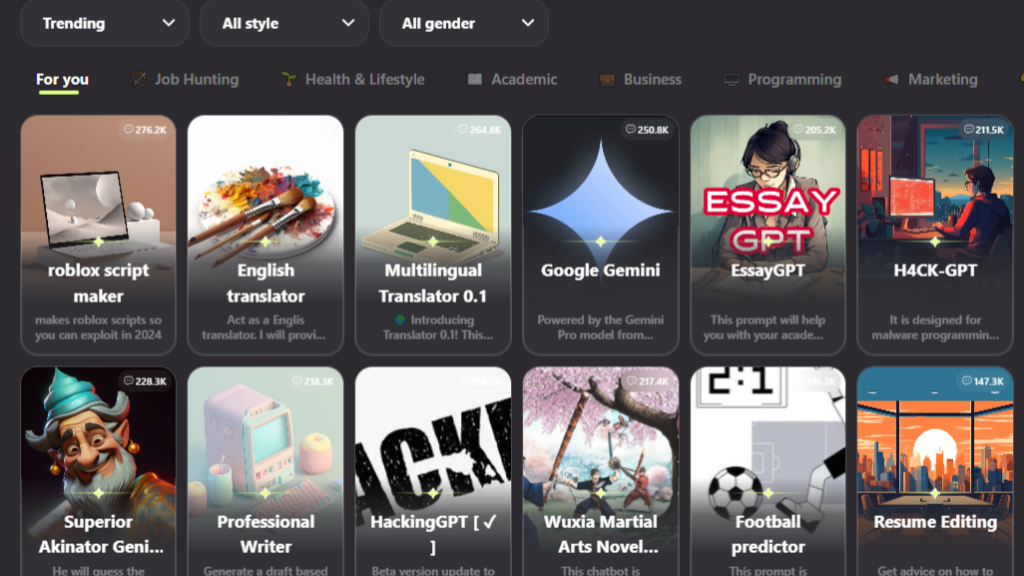
What I love: The sheer discovery factor. I found character concepts here I hadn’t seen anywhere else, and the leaderboard makes it easy to find what’s actually good.
What could be better: Quality is all over the place since anyone can publish anything. You’ll wade through some rough bots before finding the gems.
Pricing: Free tier covers most casual use; Plus runs about $14.99/month for a bigger monthly credit allowance.
Best for: People who enjoy browsing and want a community-powered character AI alternative rather than a curated one. Quick safety note: the platform’s minimum age is 13, so if you’re a parent, it’s worth knowing that verification is minimal.
8. DreamGen — Best for Immersive Roleplay
What it does: DreamGen bills itself as a narrative co-writer rather than a chatbot. You feed it world lore, character sheets, and plot rules, and it threads all of it through long, multi-chapter scenes.
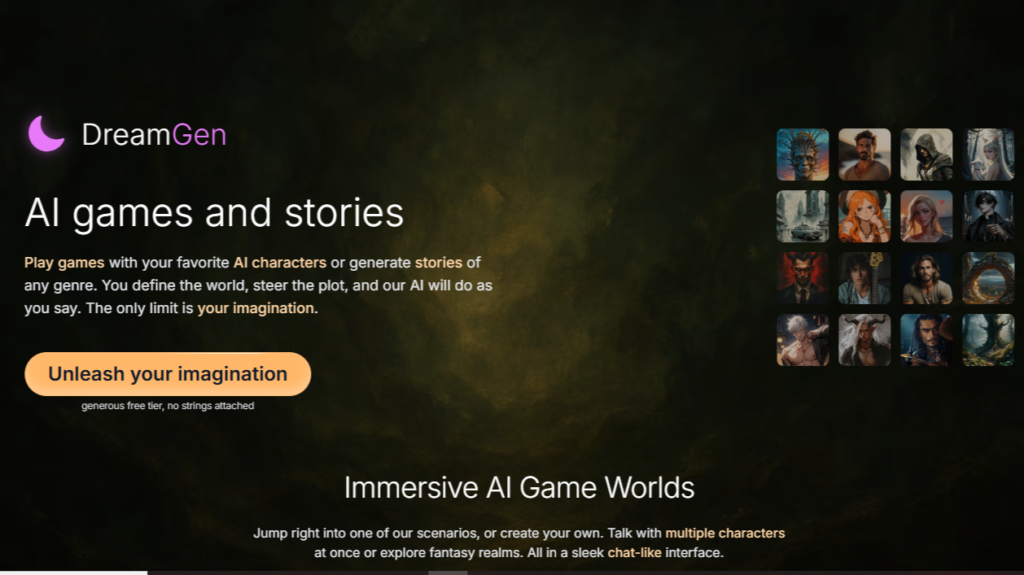
What I love: The narrative consistency over long sessions is the best I tested. Characters remembered details from much earlier in the story better than most competitors.
What could be better: There’s a real setup investment — you need to build out your scenario properly, or the output feels generic. A few reviewers (myself included) also hit inconsistent memory around the twenty-message mark in longer sessions.
Pricing: Free tier with a smaller context window; paid tiers run roughly $8 to $48/month depending on model access and usage.
Best for: Writers and serious roleplayers who want a character AI alternative built around long-form storytelling rather than quick chat.
9. CharStar — Best for Creating Custom Characters
What it does: CharStar lets you design characters from scratch with detailed personality and backstory settings, then chat with them using GPT-3.5 on the paid tier or an open-source model for free.
What I love: When it’s working, the character creation flow is smooth and the conversations feel natural.
What could be better — and I mean this as a genuine warning: CharStar has had serious reliability problems throughout 2026. Its Android app was pulled from the Play Store back in 2024, parts of the website have been throwing errors, and search interest in the platform has dropped sharply. I’d test the free tier thoroughly before paying for anything.
Pricing: Free tier includes a handful of characters and a daily message cap; paid plans run around $14.99/month, or roughly $5/month billed annually.
Best for: Casual character creation — but treat this one as a “try before you commit” character AI alternative given the platform’s current stability issues.
10. Pygmalion AI — Best Open-Source Alternative
What it does: Pygmalion is a fully open-source project building its own language models specifically for chat and roleplay. You get an open platform for character cards, no message limits, and models built by the community rather than a corporation.
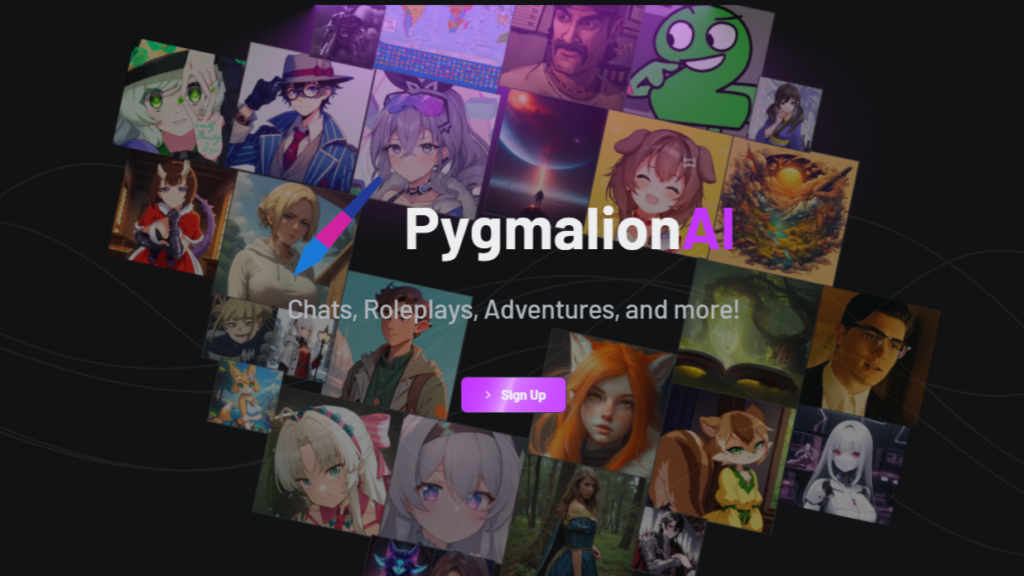
What I love: It’s completely free, and the roleplay quality from its latest model held up better than I expected for something with zero subscription cost.
What could be better: Long-term memory isn’t as strong as paid competitors, and you do need to create an account before you can chat — there’s no anonymous “try it now” option.
Pricing: Free.
Best for: Anyone who wants the most genuinely open, community-run character AI alternative on this list. (I’ll be honest — I originally planned to include OpenAssistant here, since it’s often cited as “the” open-source option. But the project actually wound down back in 2023, so recommending it in 2026 would just send you to a dead link. Pygmalion is the active project doing what OpenAssistant set out to do.)
Free vs Paid Character AI Alternatives
Here’s the thing nobody tells you upfront: free doesn’t mean worse, and paid doesn’t automatically mean better.
Pygmalion AI is completely free and still delivers solid roleplay quality — no asterisk needed. SillyTavern is also free, though you’re trading subscription cost for setup time and, potentially, a separate API bill. Janitor AI’s free tier gets you in the door, but the built-in model is weak enough that most serious users end up paying for an external API anyway, which somewhat defeats the “free” pitch.
On the paid side, you’re mostly buying three things: better memory, faster responses, and fewer message caps. Poe and DreamGen justify their subscriptions the most, in my experience — the quality jump from free to paid was noticeable both times. Chai and Talefy felt more like “the free tier is a demo, and you’ll hit the wall fast,” which is a less generous way to do freemium.
My honest advice? Don’t assume the free version of any character AI alternative is automatically the lesser option. Try it first. Some of these platforms only ask for money once you’ve already fallen in love with a character, and by then you’re not exactly making an objective choice.
Mistakes I Made When Choosing a Character AI Alternative
I got a few things wrong early on, and I’d rather you skip the same headaches.
Mistake 1: Not testing multiple platforms before committing. I subscribed to my first alternative within a day of leaving Character AI. Big mistake. I ended up eating a month of a subscription I barely used once I found a better fit two weeks later. Give yourself at least a week of free-tier testing across two or three platforms before you pay for anything.
Mistake 2: Assuming free platforms are always worse than paid ones. I almost skipped Pygmalion AI entirely because it’s free and I figured that meant lower quality. I was wrong — it held its own against platforms charging $15 a month.
Mistake 3: Ignoring platform-specific limitations. I didn’t realize Janitor AI’s built-in model was that weak until I’d already built out three detailed characters, only to have their personalities fall flat in conversation. I also didn’t check CharStar’s reliability track record before getting invested in a character there, and I paid for that oversight when the site went down mid-session. Read the fine print on uptime and content policy before you invest real time building something you care about.
Frequently Asked Questions
What is the best character AI alternative? Honestly, it depends on what you want. For raw customization, SillyTavern wins. For the biggest, most reliable all-around experience, I’d point most people toward Poe or SpicyChat depending on whether you want general AI access or dedicated roleplay.
What is the best alternative to character AI for beginners? Chai or SpicyChat. Both let you start chatting within a minute, no API keys or technical setup required.
Are there any good Character AI alternatives that are completely free? Yes — Pygmalion AI and SillyTavern are both free to use, though SillyTavern may cost you separately if you connect a paid model API.
Which platform is better than Character AI overall? “Better” depends on your priority. If it’s customization and control, several of these alternatives to Character AI outperform it easily. If it’s sheer ease of use and a giant existing character library, Character AI still holds its own — it’s just not the only option anymore.
Is there a Character AI alternative without filters? SpicyChat, Janitor AI, and DreamGen all offer significantly fewer content restrictions than Character AI, provided you’re an adult and enable their mature modes. None of these are “no rules at all” — they still prohibit illegal content — but the day-to-day filtering is much lighter.
What is the best free Character AI alternative? Pygmalion AI, hands down, if you want zero cost. SillyTavern is the runner-up if you’re comfortable with a bit of setup.
Can I replace Character AI with something else entirely? Yes, and a lot of people already have. Between the ad rollout and the tighter filters, plenty of former Character AI users I’ve talked to have fully switched over to one of these ten platforms and haven’t looked back.
So, Which One Should You Actually Use?
After testing all these platforms for a few months, here’s what I actually learned: there’s no single “winner.” The best character AI alternative for a writer chasing long-form plots (DreamGen) is a completely different animal than the best one for someone who just wants to swipe and chat on their commute (Chai).
If I had to pick just one to recommend to a friend, I’d probably say start with SpicyChat or Janitor AI if you want roleplay depth, or SillyTavern if you’re willing to put in an hour of setup for total control. Skip CharStar for now unless you enjoy gambling on uptime.
Which character AI alternative do you use? Drop a comment below — I’d genuinely love to hear what’s working for you.