Why I Went Down This Rabbit Hole in the First Place
A couple of years back I was standing in my kitchen at midnight, thumb hovering over “buy now” on a smartwatch that cost more than my electric bill, because every budget option I’d tried up to that point looked like it belonged on someone twice my wrist size. Chunky black case. Stiff rubber band that dug into my skin by 3 p.m. A screen so big it caught on my sleeve every time I typed. The “designed for women” ones weren’t much better, either — usually the exact same body with a pink strap swapped in, priced $20 higher for the privilege.
I closed the tab that night and decided to actually figure this out properly instead of guessing. Over the next couple of years that turned into a real habit: buying, wearing, and returning budget smartwatches, partly for work and partly because I got weirdly invested in proving that “under $100” didn’t have to mean “looks like a hand-me-down.” At this point, friends just text me a screenshot of whatever watch they’re eyeing and ask if it’s any good, so I figured I’d finally write the whole thing down.
This is my current, honest answer to the question I get asked constantly: what’s the best smartwatch for females who don’t want to spend a fortune and don’t want to feel like they’re wearing a walkie-talkie? Seven picks, all under or right around $100, all things I’ve actually strapped on and lived with — not a list pulled off a spec sheet.
One quick note before we get into it: prices on every one of these move around constantly with sales. I’ve listed what I’ve actually seen them sell for, but check the current price before you buy — a couple of these dip $15 to $20 lower during sale events.
The Best Smartwatch for Females at a Glance
| Model | Key Feature | Battery Life | Wrist Compatibility |
|---|---|---|---|
| Amazfit Active 2 | AMOLED screen + offline GPS maps | Up to 10 days | 44mm case, fits most adult wrists |
| Amazfit Bip 6 | Continuous SpO2/HR + auto strength tracking | Up to 14 days | Adjustable silicone band, standard fit |
| Fitbit Inspire 3 | Ultra-slim, under 1 inch wide | Up to 10 days | Built for narrow, smaller wrists |
| CMF Watch Pro 2 | Genuinely equal iPhone + Android support | Up to 11 days | Single 42mm case, ~48g total weight |
| Amazfit Bip 5 | Huge 1.91″ display + Bluetooth calls | Up to 10 days (7 in real use) | 46mm case, but only 26g |
| Amazfit Band 7 | 18-day battery life | Up to 18 days | Slim band style, fits most wrists |
| Willful Smart Watch | Lowest price, thousands of reviews | Varies widely, ~3-10 days | Adjustable strap, general fit |
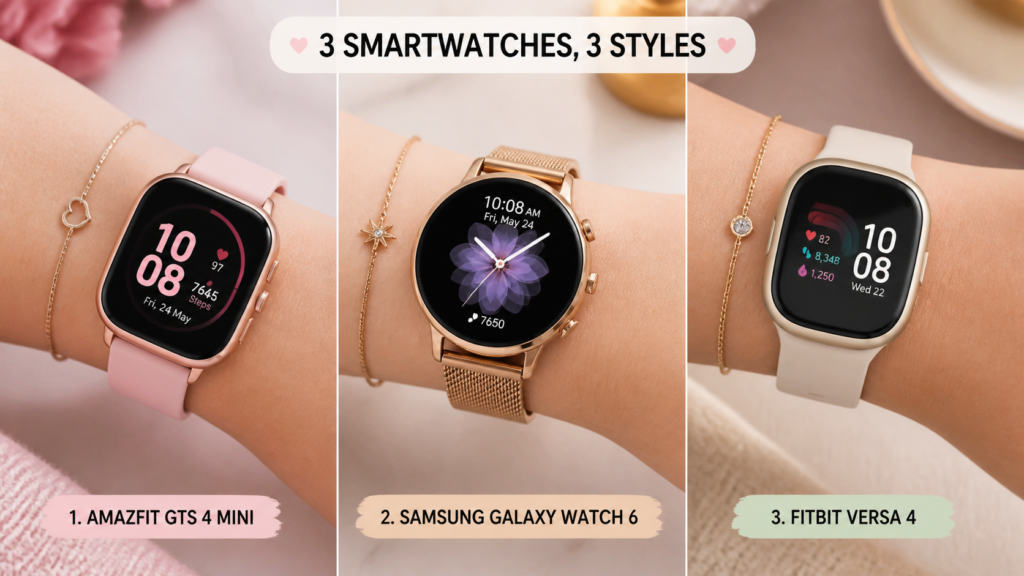
Detailed Reviews: The 7 Budget Picks I’d Actually Hand to a Friend
1. Amazfit Active 2 — Best Overall Budget Pick
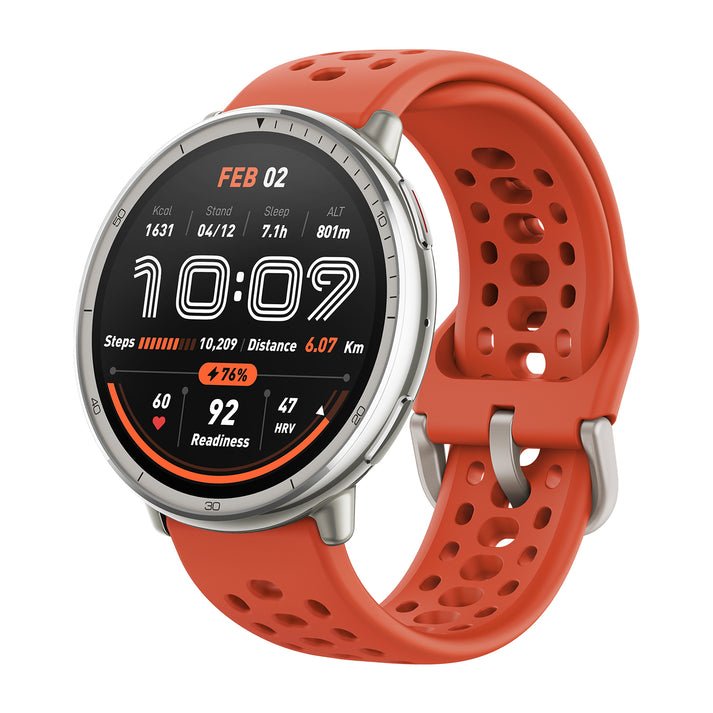
If someone made me pick just one answer to “what’s the best smartwatch for females right now,” I’d point at the Amazfit Active 2 without much hesitation.
At $99.99 (I’ve caught it on sale closer to $80 more than once), it does the thing budget watches almost never pull off — it doesn’t feel like a compromise. The 1.32-inch AMOLED display gets properly bright, easy to read standing outside at a stoplight. The 44mm aluminum case runs on the larger side, so if you’ve got a genuinely tiny wrist it might sit a little proud, but on an average wrist it never felt like strapping on a small television.
What actually sold me was the offline maps. I did not expect a sub-$100 watch to let me leave my phone at home on a trail run and still find my way back. Battery landed close to the claimed 10 days with the always-on screen turned off. Amazfit’s companion Zepp app already includes cycle tracking, and it recently gained deeper personalized recovery and training insights through a partnership with the women’s health platform Wild.AI — a detail that made this feel less like a generic fitness gadget with a coat of pink paint and more like something actually built with women’s health in mind.
Where it falls short: the standard strap isn’t the most premium material, and NFC payments are locked behind the $129.99 premium version, which pushes it past the $100 mark if that matters to you.
2. Amazfit Bip 6 — Best for Fitness & Health Tracking (Cycle Tracking, SpO2, Heart Rate)
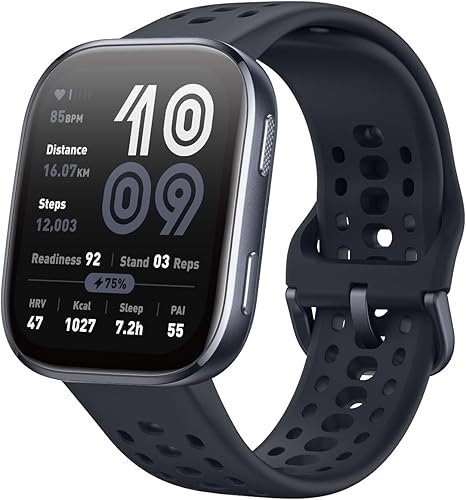
This is the one I reach for on actual training weeks, not just casual wear.
At $79.99, the Bip 6 packs Amazfit’s newer BioTracker 6.0 sensor, which runs continuous heart rate and blood oxygen monitoring rather than just spot-checking when you open an app. The 1.97-inch AMOLED display hits 2,000 nits, so it stays readable mid-workout in direct sun, and a built-in Cycle Tracking widget lets you log your period and see predictions right from the watch face without touching your phone.
The feature I didn’t know I needed: Strength mode. It auto-detects when you’re lifting, counts your reps, and tracks rest periods between sets, then syncs the whole session to Strava if that’s where you log training. Amazfit claims 14 days of battery life, and with the always-on display switched off, that held up realistically for me rather than feeling like marketing fluff.
Where it falls short: the Zepp app can feel data-dense and a little unpolished next to Fitbit’s cleaner interface, and GPS accuracy under heavy tree cover occasionally drifted.
3. Fitbit Inspire 3 — Best Aesthetic & Slim Design (Specially Built for Smaller Wrists)
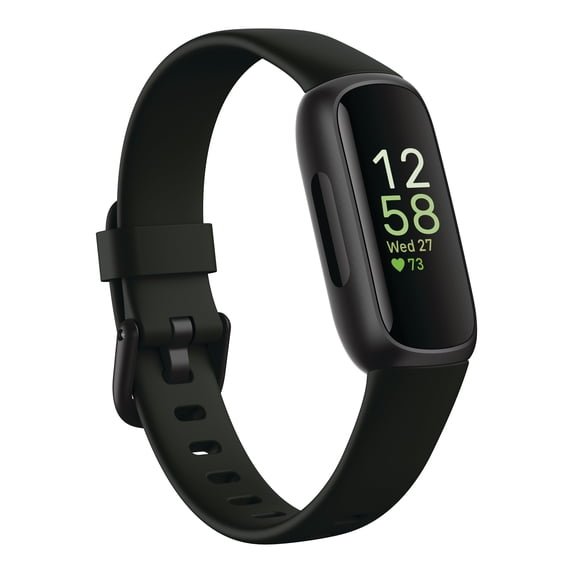
If your wrist is genuinely small — not “small for a smartwatch,” but actually small — this is the one I’d steer you toward first.
The Inspire 3’s band measures under an inch wide and the whole unit weighs about 3.8 ounces, so it reads more like a slim bracelet than a gadget. I’ve worn it to sleep multiple nights in a row without once feeling like I needed to take it off, which is more than I can say for half the watches on this list. List price sits at $99.95, though it regularly drops into the $65-80 range during sales.
The Fitbit app is genuinely the most mature, polished experience in this price bracket — a Daily Readiness Score, detailed sleep-stage breakdowns, a Stress Management Score, and long-running support for logging your menstrual cycle and symptoms. Battery lasts about 10 days per charge.
Where it falls short: there’s no built-in GPS, so it borrows your phone’s signal when you’re tracking a run, and the small screen means longer notifications get cut short fast.
4. CMF Watch Pro 2 — Best for Android & iOS Cross-Compatibility
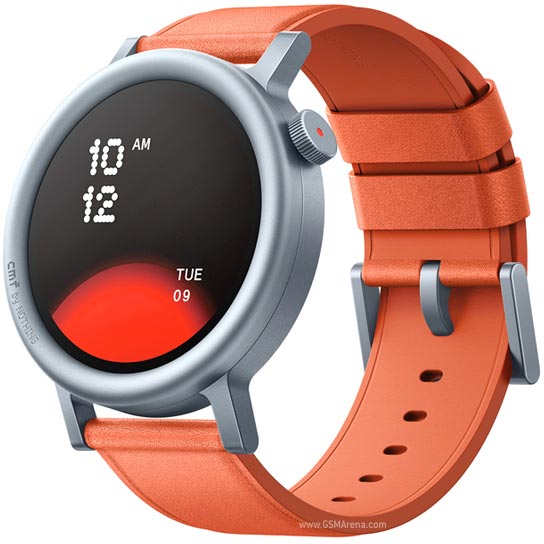
Most budget smartwatches quietly favor Android and treat iPhone owners like an afterthought — fewer features, clunkier notifications, sometimes no call support at all. The CMF Watch Pro 2, from Nothing’s budget sub-brand, is the rare exception, and it’s the one I recommend to friends who switch between an iPhone and an Android phone, or share a watch with a partner on a different OS.
At $69 (I’ve seen it drop to around $59 during sales), you get a crisp 1.32-inch circular AMOLED display, an evenly matched experience whether you pair it to an iPhone or an Android phone, and interchangeable bands and bezels if you want to change the look for work versus the gym. Battery claims 11 days and held up close to that with occasional GPS workouts thrown in. It’s IP68-rated and comes in a light 42mm case that sits comfortably on smaller wrists too.
Where it falls short: there’s no dedicated app store, so you’re working with a fixed set of features rather than a customizable smartwatch experience, and raise-to-wake can be a little inconsistent.
5. Amazfit Bip 5 — Best Big-Screen Value Pick
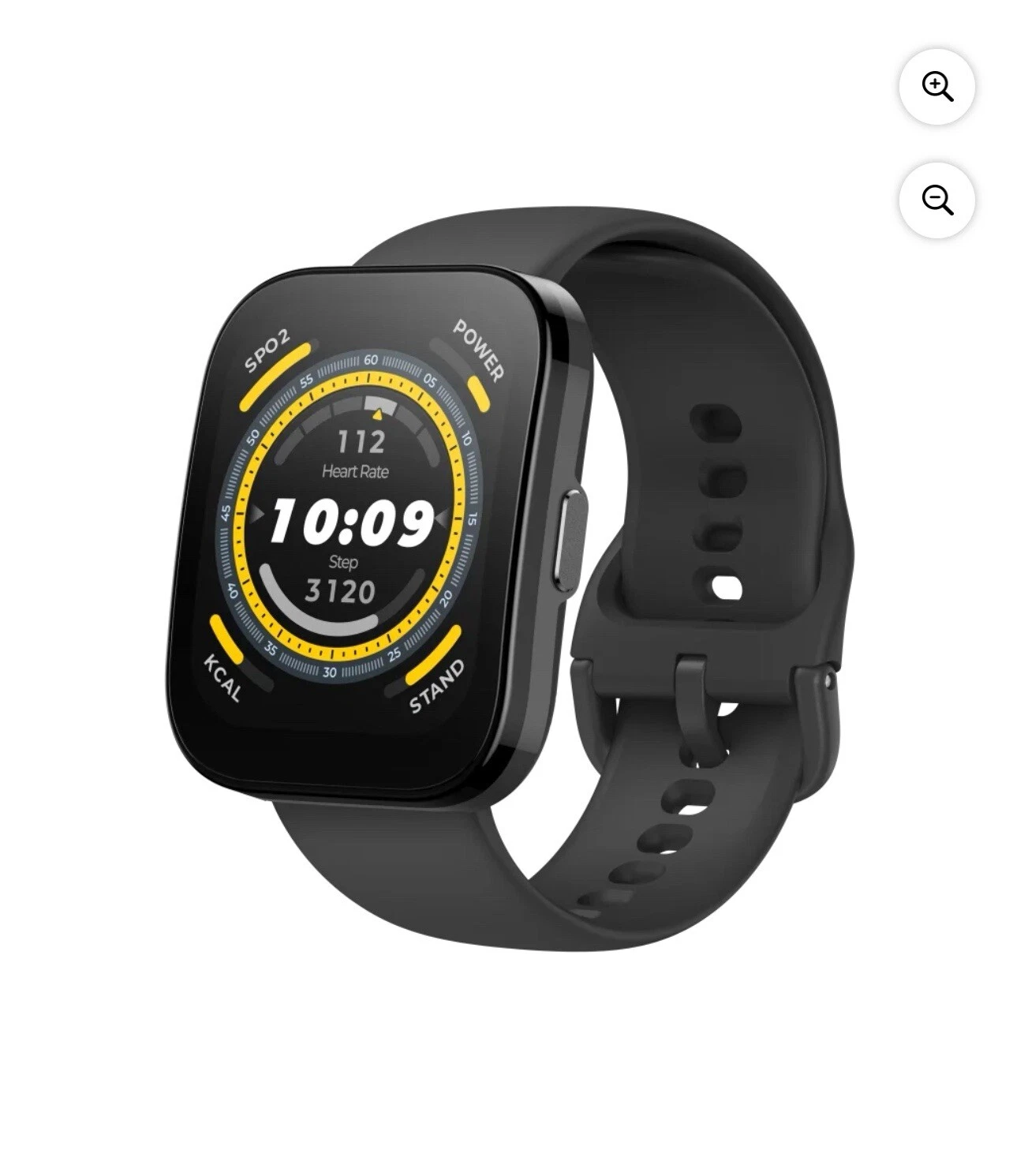
This is the one to get if you want the biggest screen for the smallest price.
At around $72 (the list price has bounced between roughly $72 and $89 depending on the sale cycle), the Bip 5’s 1.91-inch display is enormous for this bracket, and the whole watch weighs just 26 grams, so despite the big face it never felt heavy on my wrist. You get Bluetooth calling, Alexa built in, SpO2 and heart rate tracking, and 120+ sport modes, plus genuinely cute color options — I’ve seen it in Pastel Pink and Cream White, not just the usual black.
Amazfit claims 10 days of battery life; in real daily use with the brightness up, I landed closer to 7, which is still solid for the price but worth knowing going in.
Where it falls short: the display is LCD rather than AMOLED, so blacks look more gray than true black, and it skips the offline maps and newer sensor found on the pricier Active 2.
6. Amazfit Band 7 — Best Battery Life Under $50
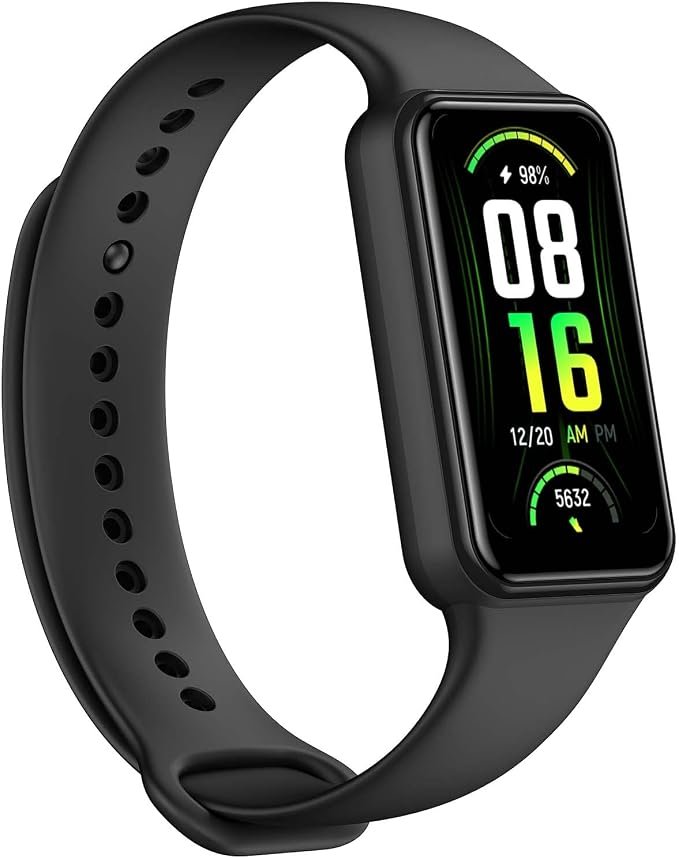
If charging your smartwatch every week feels like a chore you’ll eventually just stop doing, this is the fix.
At $49.99, the Band 7 is the cheapest way onto this whole list, and it trades a bit of screen size (1.47 inches) for an excellent 18-day battery life. It’s got a bright AMOLED display, Alexa built in, 5 ATM water resistance, and covers the daily basics — steps, heart rate, sleep, SpO2, stress — across 120+ workout modes.
Where it falls short: GPS is connected rather than built-in, meaning it leans on your phone’s signal for route tracking, and the smaller screen turns longer notifications into a squint-and-scroll situation.
7. Willful Smart Watch — Best Ultra-Budget Starter Pick
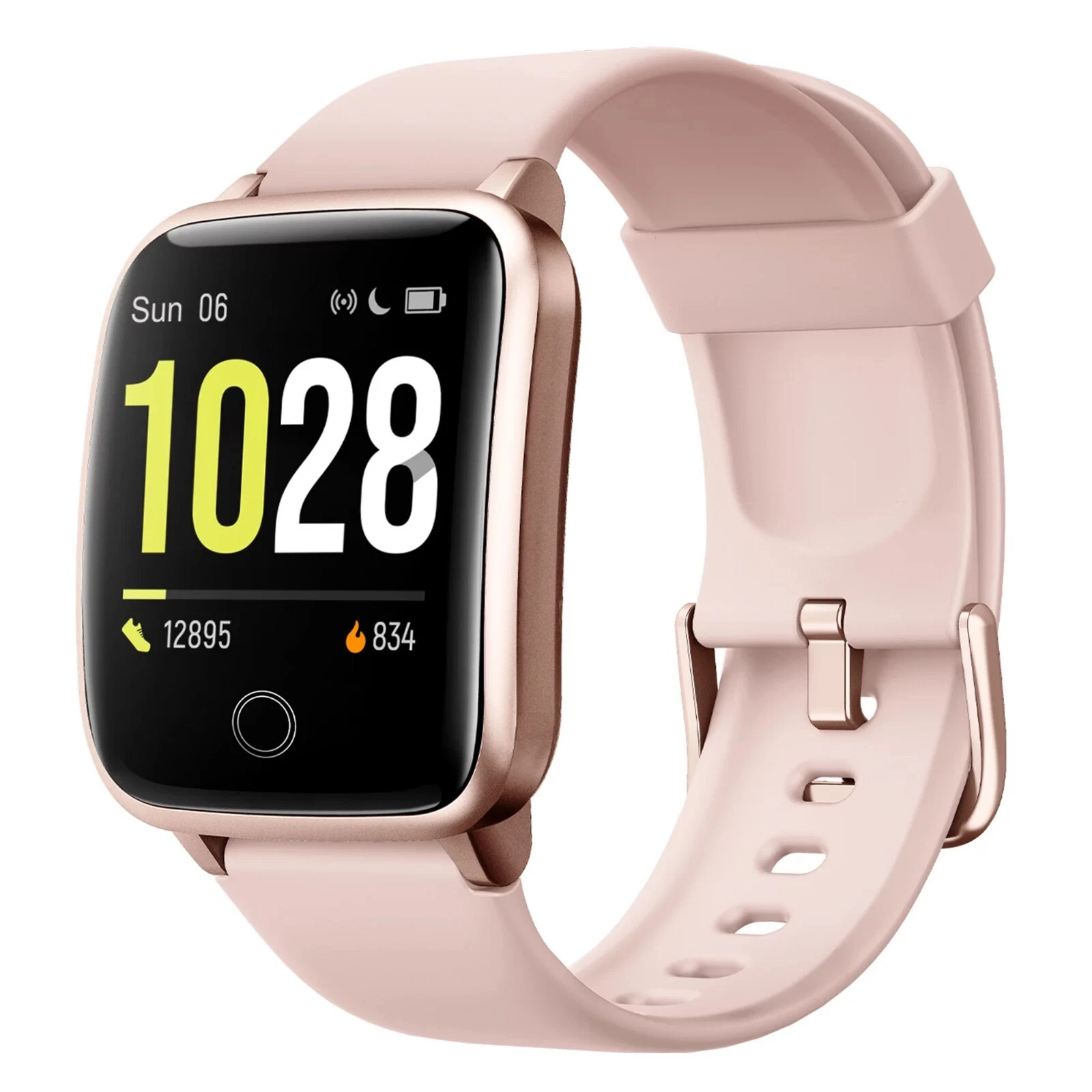
I went into testing this one expecting to be unimpressed, and came away pleasantly surprised given the price.
Willful smartwatches typically run somewhere between $30 and $40, and despite the rock-bottom price, the model I tried has tens of thousands of reviews on Amazon sitting around a 4.4-4.5 star average, which isn’t nothing. It covers heart rate monitoring, basic notifications, sleep tracking, and IP68 water resistance, and it works with both Android and iPhone.
It’s not going to fool anyone into thinking it’s a premium device — the plastic case and bezel are noticeably chunkier than anything else on this list. Battery life is honestly all over the place depending on who you ask: some reviewers report nearly two weeks, others closer to three or four days, and my own experience landed somewhere in the middle. But if you or someone you’re shopping for has never worn a smartwatch and isn’t sure they’ll stick with it, this is a low-risk way to find out before spending more.
Key Features to Look For Before You Buy
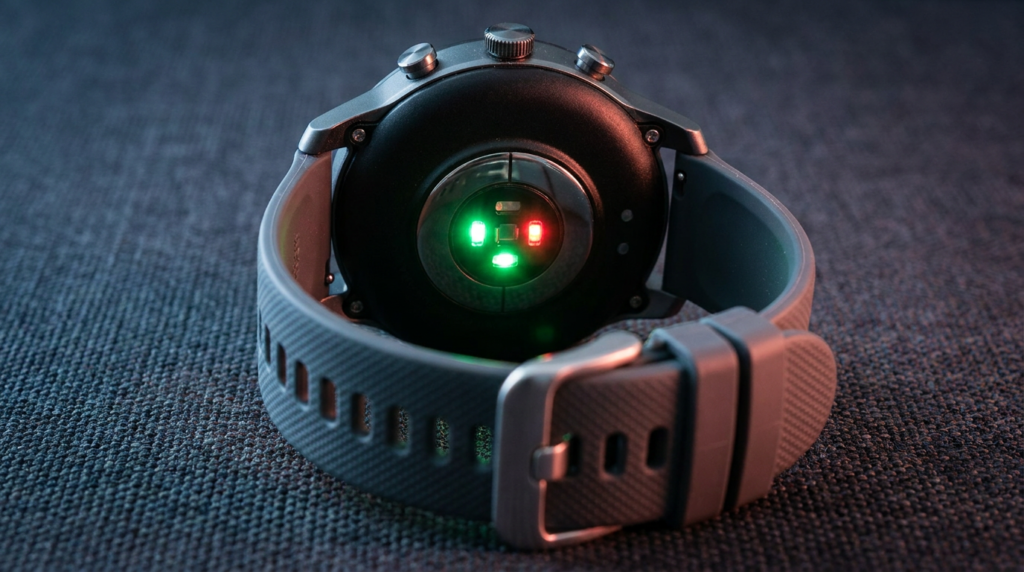
Whenever a friend asks me to help her find the best smartwatch for females in her life — herself, her mom, a sister who wants something for the gym — these are the four things I actually check before price or brand name.
Screen Size and Readability
Bigger isn’t automatically better. A large display is great for reading texts at a glance, but on a genuinely small wrist it can look disproportionate, and it usually costs you battery life too. AMOLED screens — like the ones on the Active 2, Bip 6, and CMF Watch Pro 2 — look noticeably richer and stay readable in direct sunlight compared to the cheaper LCD/TFT panels found on watches like the Bip 5.
Strap and Band Quality
This is the thing nobody mentions in spec sheets, and the thing that actually determines whether you keep wearing the watch past week two. Stiff silicone bands can leave marks or trap sweat and irritate skin, especially if you wear the watch to sleep. If you can, check reviews specifically for comments about the band before you buy — not just the sensors.
Sensor Accuracy (Heart Rate, SpO2, and Beyond)
Every watch on this list tracks heart rate and blood oxygen to some degree, but it’s worth setting expectations here: these are consumer-grade optical sensors, not medical devices, and accuracy tends to dip during high-intensity intervals or if the band’s too loose. They’re genuinely useful for spotting trends over time, but treat any single unusual reading as a reason to check in with an actual doctor, not a diagnosis in itself.
Battery Life vs. Smart Features
This is the real trade-off at this price. Watches with punchier smart features — offline maps, AMOLED always-on displays, Bluetooth calling — tend to drink more battery, while simpler devices like the Amazfit Band 7 sacrifice some screen size and features for battery life that can stretch past two weeks. Decide honestly which one you’ll actually resent more: charging often, or missing a feature.
Real Mistakes & Pitfalls to Avoid
I made most of these mistakes myself before I landed on what I’d now call the best smartwatch for females on a genuinely tight budget, so hopefully this saves you a step or two.
Falling for unbranded “does everything” knockoffs. If a $25 watch claims clinical-grade blood pressure monitoring, ECG readings, and body temperature accuracy all in one, be skeptical. Those claims usually aren’t backed by any real validation, and you’re better off with a known brand that’s upfront about what its sensors can and can’t do.
Not checking app compatibility before you buy. Some budget brands quietly build their best features for Android first and ship a stripped-down iPhone experience later, if at all. If you’re on an iPhone, actually search “[watch name] + iPhone reviews” before buying, not just the general reviews.
Ignoring the band material. A watch with great specs and an uncomfortable band is a watch that ends up in a drawer within a month. If you have sensitive skin, look specifically for silicone described as skin-friendly or hypoallergenic, and steer clear of anything with a rigid clasp that can’t be finely adjusted.
Chasing spec-sheet numbers you’ll never use. 160 sport modes sounds impressive on a product page, but if you’re mostly walking, doing yoga, and occasionally jogging, what actually matters day to day is comfort, notification reliability, and battery life — not whether it can technically track cricket or darts.
Frequently Asked Questions
What’s the best smartwatch for females with a small wrist?Based on my testing, the Fitbit Inspire 3 is the strongest pick if your wrist runs genuinely small — its band is under an inch wide and the whole unit is noticeably lighter than most watches on this list. The CMF Watch Pro 2’s compact 42mm case is a solid second option.
Are budget smartwatches under $100 actually accurate for heart rate and SpO2?They’re good enough for tracking trends over time — resting heart rate creeping up, sleep quality dipping during a stressful week — but they’re consumer-grade sensors, not medical equipment. Don’t rely on any smartwatch under $100 (or honestly, any smartwatch) for a medical diagnosis.
Can I shower or swim with a budget smartwatch?Most of the watches on this list are rated IP68 or 5 ATM, which covers hand-washing, rain, and swimming in a pool. I’d still avoid hot showers and saunas, since heat and steam are harder on the seals than plain water.
Do cheap smartwatches actually work well with both iPhone and Android?It varies more than you’d think. The CMF Watch Pro 2 and Fitbit Inspire 3 both offer an evenly matched experience across both operating systems. Some Amazfit models lean slightly more feature-rich on Android, though that gap has narrowed a lot over the past couple of years.
Is it worth spending more than $100 on a smartwatch instead?If you want built-in cellular, a premium always-on display, or deeper third-party app support, you’ll notice the difference above roughly $150-200. But for daily notifications, fitness tracking, sleep data, and cycle tracking, the picks on this list cover the vast majority of what most people actually use a smartwatch for.
My Honest Final Take
If you made me choose just one, I’d hand you the Amazfit Active 2 and tell you to stop scrolling — it’s the closest thing to a “no notes” budget pick I’ve tested. But that’s not really the point of this list. The best smartwatch for females isn’t one universal answer; it’s whichever one of these actually fits your wrist, your phone, and your routine without you having to think about it after the first week.
Got a genuinely small wrist? Go Fitbit Inspire 3. Split your time between an iPhone and an Android phone? Go CMF Watch Pro 2. Buying your first smartwatch and not sure you’ll even like wearing one? There’s no shame in starting with the $30 Willful and upgrading later once you know what you actually want.
Whichever one you land on, wear it for a full week before you decide. That’s usually when you find out if a watch actually fits your life, or if it’s headed for the drawer with the rest of them.
Planning to upgrade your setup soon? Check out our breakdown on the Foldable iPhone Release Date, Leaks, and What to Expect to see what Apple is brewing for the future of iOS gaming.