A friend texted me a link a few months back with three words: “yo, free NFL.” It opened straight into a page most people just call the tv app — no download screen, no login wall, just a grid of live channels sitting right there in a browser tab.
I’ll be honest, I hovered over the play button for a solid minute. Free ESPN, free HBO, zero subscriptions — that’s the exact dream every cord-cutter chases.
But something felt off before I ever hit play. No app store listing, no company name anywhere on the page, no “About Us,” no support email. So instead of watching the game, I closed the tab and spent the next few days researching the tv app instead — who runs it, whether it’s legal, and what actually happens to your device when you use a site like this.
What I found wasn’t pretty. Between the copyright exposure, the security research, and a shutdown that left thousands of people staring at error pages mid-game, I walked away convinced the tv app is a far bigger gamble than the ads make it look. Here’s everything I dug up, red flags included.
What Is The TV App?
Strip away the branding and it’s a browser-based streaming site that offers free access to live TV — sports, news, cable channels — without asking for a credit card, an email address, or even a name.
At its peak, it reportedly carried more than 100 live channels, everything from major sports networks to premium cable that normally sits behind a hundred-dollar-a-month bill. No installation required — you just opened a tab, picked a channel, and started watching.
What you won’t find is any information about who’s actually behind it. There’s no listed company, no customer support line, and no privacy policy explaining what happens to your data once you land on the page. That absence of basic transparency was red flag number one for me.
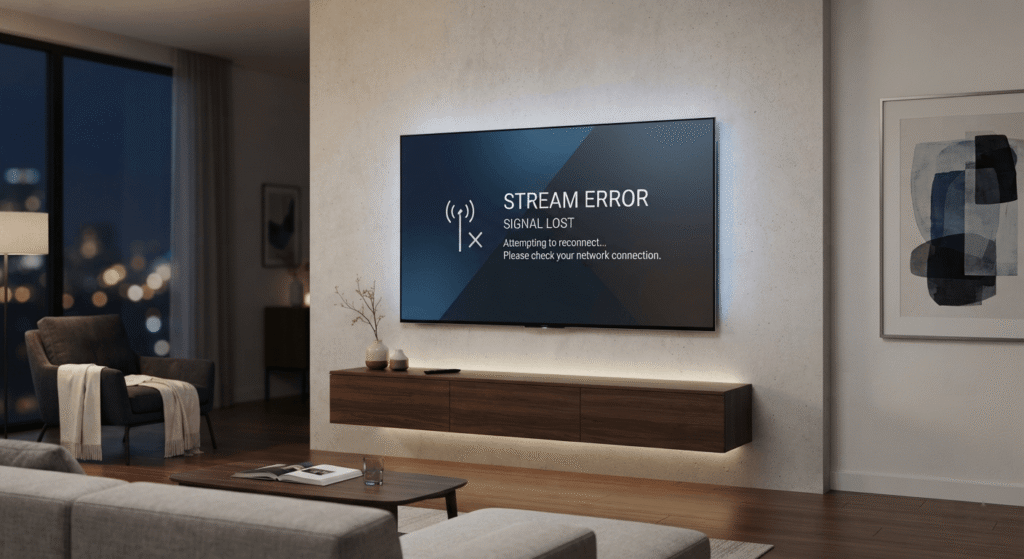
It’s also not stable. This site went completely dark in mid-December 2025, right in the middle of an NFL Sunday, and reporting at the time pointed to legal pressure rather than a server hiccup.
It came back — and then went dark again months later, alongside a couple of similar sites sharing its infrastructure. A service that can vanish mid-game with zero warning isn’t one I’d want to build a Sunday routine around.
Why I Didn’t Download The TV App
Once the curiosity wore off, I did what I always do before touching a new site: I looked up who runs it, what people are actually saying, and what the legal situation looks like. That research is the entire reason I never installed the tv app.
The first issue is hard to miss once you look for it. This platform doesn’t hold the rights to broadcast any of what it streams.
Live sports, cable news, premium channels — that content is licensed to specific companies for specific regions, and none of those licenses belong to whoever operates this site. More than one outlet covering its shutdown called it “a scrappy but illegal streaming hub,” which is about as accurate a summary as I’ve seen.
Then there’s the safety side of things. Digging through reviews and user reports, I found repeated mentions of scam pop-ups, sketchy redirects, and phishing attempts tied to sites in this exact category. For what it’s worth, the site’s own Trustpilot page sits at a lukewarm 2.9 out of 5, which isn’t exactly a ringing endorsement either.
Between the legal exposure and the safety reports, I decided it wasn’t worth it. I wanted free football, not a compromised laptop or a copyright headache — and it couldn’t guarantee me either.
Is The TV App Legal?
This is probably the question most people actually came here for, so I’ll be direct: no, the tv app is not legal, at least not in the way it currently operates.
The site doesn’t hold broadcasting rights for the channels or sports it streams. In the U.S., that matters a lot: the Protecting Lawful Streaming Act makes large-scale unauthorized streaming a federal felony for the people running the operation, punishable by up to 10 years in prison. Premium cable networks, paid sports feeds, and pay-per-view events all require licensing that a free, anonymous site simply doesn’t have.
Enforcement tends to focus on operators rather than individual viewers, but that doesn’t make using it risk-free.
What it does mean, practically, is instability. Domains get seized. Sites disappear without warning — exactly what happened during that December 2025 NFL Sunday. Some users have also reported ISP warnings tied to unauthorized streaming traffic on their connection. None of that is a knock on your door, but it’s disruption you’re inviting in for the sake of a free stream.
One more thing worth clearing up: a VPN doesn’t fix any of this. It can hide your IP address, sure, but it doesn’t grant broadcasting rights to a service that doesn’t have them. An unauthorized stream stays unauthorized, VPN or not.
Security Risks of The TV App
Even setting the legal questions aside, the security risks around the tv app are enough on their own to make me nervous.
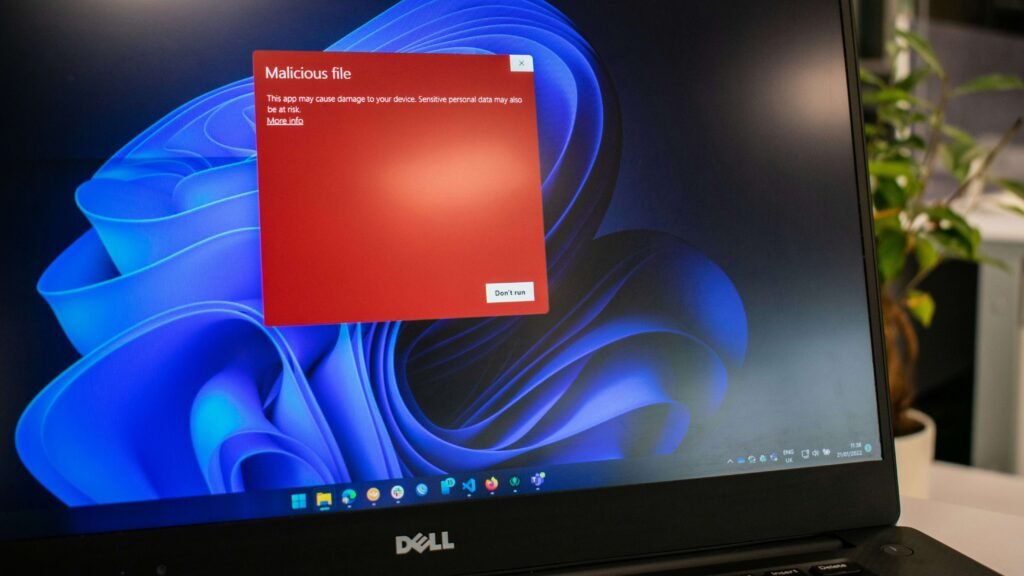
Malware is the big one. Research published in 2026 by the Coalition Against Piracy, an initiative of the Asia Video Industry Association (AVIA), tested a wide range of illicit streaming apps and devices. Nearly half of them contained malware capable of harvesting personal data and enabling identity fraud.
That study covered the broader piracy ecosystem rather than this one site specifically. But this platform runs on the same basic model — free access funded by aggressive, loosely vetted ads — so there’s no good reason to assume it’s the exception.
Data harvesting is the quieter risk. A site with no privacy policy and no terms of service gives you zero visibility into what it collects or who it shares that data with. That’s not paranoia, it’s just the absence of any accountability structure.
Phishing is the one that actually costs people money. Free streaming sites lean heavily on pop-ups, fake “update your player” prompts, and redirect chains that lead somewhere you never intended to go. Click the wrong one and you’re looking at anything from a hijacked browser to a fully compromised account.
There’s also an impersonation problem worth knowing about. Because this service has gone up and down so many times, a small ecosystem of copycat domains and lookalike apps has grown up around the same name — some are just broken mirrors, others exist purely to catch people searching for the original.
Using this service isn’t just illegal — it’s dangerous. That combination is exactly why I never got past the research stage.
Legit Free Streaming Alternatives (2026)
Here’s the good news: you don’t need the tv app, or anything like it, to watch live TV for free. Legal, ad-supported streaming has gotten genuinely good.
Pluto TV — Owned by Paramount, Pluto TV runs well over 250 live channels covering news, sports, movies, and reality TV, plus a deep on-demand library. Completely free, no account required.
Tubi — Fox-owned and free, with a massive on-demand catalog and a growing set of live channels. Creating an account is optional, not required.
Peacock (free access) — Peacock’s standalone free sign-up isn’t open to new users anymore, but here’s what a lot of people miss: if you already have Xfinity or Cox internet, Peacock Premium is often already included at no extra cost. Worth checking your existing bundle before paying for anything new.
Arte.tv & France.tv — Underrated if you like documentaries, film, or European news. Both are free and ad-supported, though they’re built primarily for France and Germany, so some content is geo-restricted elsewhere.
WikiFlix — A Wikimedia-run project offering more than 4,000 public-domain classic films. No ads, no account, no catch — just decades of film history free to stream.
Free live TV apps — Beyond the big names, services like Plex bundle hundreds of free live channels with on-demand movies, and a basic digital antenna paired with a network’s own app gets you local channels at zero cost, completely legally.
None of these will perfectly clone its exact channel lineup — legal alternatives rarely do — but stack two or three together and most people can cover live sports, news, and entertainment without touching a pirated stream. (If you’re just starting to cut the cord entirely, I’ve got a separate guide on cord-cutting basics that’s worth a read too.)
Frequently Asked Questions (FAQs)
Is the tv app safe? Not reliably. Without a privacy policy, verified ownership, or any customer support, there’s no way to confirm what happens to your data or what you’ll run into on any given visit. Some sessions are uneventful; others expose you to malicious pop-ups or redirect links. That inconsistency is itself the risk.
Is the tv app legal? No. It streams content without holding the broadcasting rights to it, which puts it squarely in pirated-streaming territory under U.S. copyright law, even though individual viewers are rarely the target of enforcement.
Why did the tv app go offline? It went dark in mid-December 2025 during an NFL Sunday, and coverage at the time pointed to legal pressure on the operators rather than a technical failure. It’s happened more than once since — sites like this tend to disappear and reappear under new domains, which is part of why relying on one for regular viewing is such a shaky bet.
Can I get a virus from using it? It’s a real possibility. Independent research on illegal streaming apps and devices has repeatedly found malware in a large share of them, and phishing pop-ups and fake download prompts are common across this entire category of site. The stream itself might load fine — it’s usually the ads and click-through prompts around it that cause the actual damage.
What are safe alternatives to the tv app? Pluto TV, Tubi, Peacock (especially if it’s bundled with your internet plan), Arte.tv, France.tv, WikiFlix, and Plex’s free live channels cover a lot of the same ground — live news, sports, movies, and TV — completely legally.
Is it illegal to watch the tv app? Streaming unauthorized content is a copyright violation in the U.S., though prosecution of individual viewers is rare, since most legal action targets the people operating the site. “Rarely prosecuted” isn’t the same thing as “legal,” and enforcement patterns can shift.
Will I get in trouble for using it? Probably not in the form of a knock on your door, but trouble comes in smaller packages too — the site disappearing mid-show, exposure to malware or phishing, and occasional ISP warnings about unauthorized streaming traffic. None of that feels worth it when free, legal options already cover most of the same content.
Final Thoughts
I get the appeal, I really do. Free live sports and cable channels with zero setup is exactly the kind of thing that goes viral in a group chat, and the tv app clearly scratched an itch for a lot of people before it started disappearing on them.
But after digging into the legal exposure, the security research, and watching it vanish mid-game more than once, I landed on a simple conclusion: it’s not worth it. There are plenty of legal, safe, and free streaming options out there that cover most of the same ground without the copyright risk or the malware roulette.
After all my research, I decided to stay far away from the tv app, and I think you should too. Pick two or three of the legit alternatives above, and build yourself a setup that won’t vanish on you during the fourth quarter.
Which legal streaming app do you use? Drop a comment below — I’d love to hear your recommendations!
Switched to a new Apple device recently or planning to make the jump soon? Check out my complete step-by-step guide on how to migrate Android contacts to iPhone without losing a single phone number.