My buddy texted me last week: “Should I sell my Z Fold and just wait for Apple’s version?”
I’ve gotten some version of that question probably a dozen times this year. And honestly, I get it. I’ve been carrying a Samsung Galaxy Z Fold as my daily driver for over two years now, I’ve borrowed a Pixel Fold for a solid month, and I still catch myself checking rumor sites at 11pm like it’s breaking news about a family member. So when people ask me about the Apple foldable iPhone, I don’t just repeat headlines — I actually think about it from the angle of someone who lives with a folding phone every single day.
This isn’t a “here’s everything Apple announced” post, because Apple hasn’t announced anything yet. What I want to do instead is walk you through what’s actually credible right now, what I’d personally expect based on how foldables behave in real life, and the mistakes I see people making while they wait around for a phone that doesn’t exist yet.
Let’s Get the Obvious Thing Out of the Way
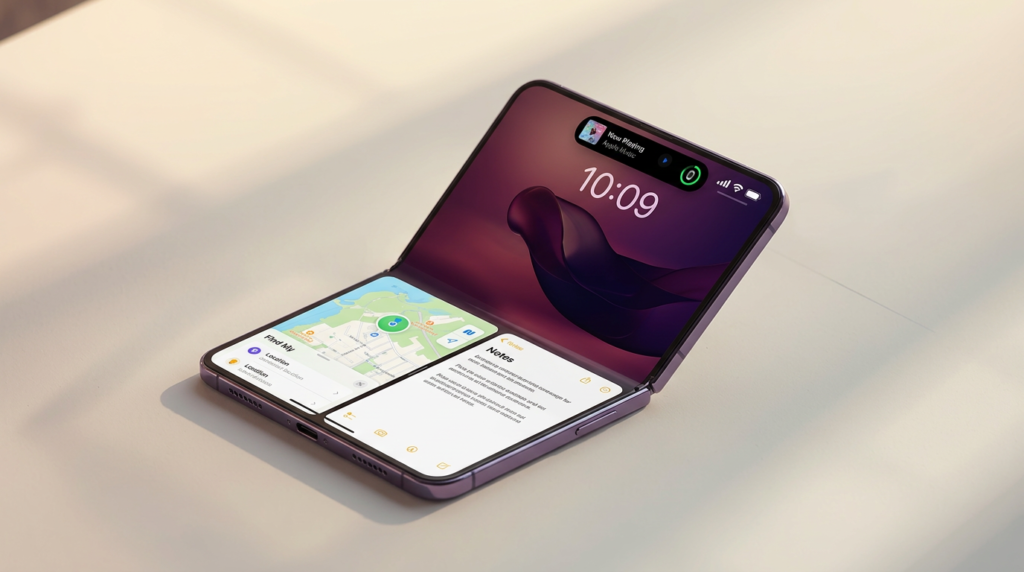
The Apple foldable iPhone is not out yet. As of right now, nobody outside Apple’s campus has held one, reviewed one, or dropped one on a tile floor (give it time, someone will). Anyone showing you “hands-on footage” is either showing a 3D-printed dummy shell or straight-up making things up for clicks. I’ve fallen for a fake render before — spent twenty minutes analyzing hinge gaps on what turned out to be a fan concept video. Lesson learned: check the source before you trust the pixels.
That said, the leaks around Apple’s foldable phone have gotten a lot more consistent over the past several months, which usually means Apple’s supply chain is actually moving, not just idling.
What’s Actually Credible Right Now
Here’s the part I trust, pieced together from supply-chain reporting and analysts who’ve been reliable before (Ming-Chi Kuo and Bloomberg’s Mark Gurman, mainly):
Timing. Multiple reports point to a fall 2026 launch, likely alongside the iPhone 18 Pro lineup at Apple’s usual September event. There was a stretch this spring where Nikkei reported possible delays over hinge engineering, and Apple’s stock actually dipped on that news, but Gurman pushed back pretty quickly and more recent supply-chain updates still have production tracking for a September reveal, even if actual shipping slips a few weeks into October.
Design. This is where it gets interesting for anyone who’s used a foldable before. The Apple foldable iPhone is expected to use a book-style, vertical fold — open it like a book and you get a bigger internal screen, close it and it looks like a slightly thicker, squarer iPhone. That’s the same basic layout as my Z Fold and the Pixel Fold, not a flip-style clamshell like the Galaxy Z Flip. Reports mention an internal display somewhere around 7.7 inches with a roughly 4:3 aspect ratio, so more iPad mini than typical phone screen.
The crease. Apple is apparently obsessing over getting the fold line as invisible as possible, which, if you’ve used any current foldable, you’ll understand is a big deal. I can feel the crease on my Z Fold every single time I swipe across the screen. It’s not a dealbreaker, but it’s there, and Samsung still hasn’t fully solved it after seven generations. If Apple genuinely nails a near-invisible crease on this thing, that alone would be a legitimate reason to switch.
Price. Expect this thing to hurt. Recent numbers floating around are north of $1,999, possibly closer to $2,000-something depending on storage. For comparison, my Z Fold 7 was $1,899 at launch. So we’re not talking about a small premium over a regular iPhone Pro Max — we’re talking about paying for a small laptop.
A Step-by-Step Way to Decide If You Should Wait
I’m not going to tell you what to do with your money, but here’s the process I’d actually walk through if I were in your shoes right now:
Step 1: Ask what you actually need a bigger screen for. Be honest. Is it reading, spreadsheets, video calls, drawing? My use case is mostly reading long documents and comparing two apps side by side. If your answer is “I just think it looks cool,” that’s a fine reason too, just know it costs a premium.
Step 2: Try a current foldable before committing to anything. Go to a Best Buy or a carrier store and actually hold a Galaxy Z Fold or a Pixel Fold for ten minutes. Open it, close it, put it in your pocket, feel the weight. A lot of people romanticize foldables until they realize the phone is noticeably thicker closed than a regular phone.
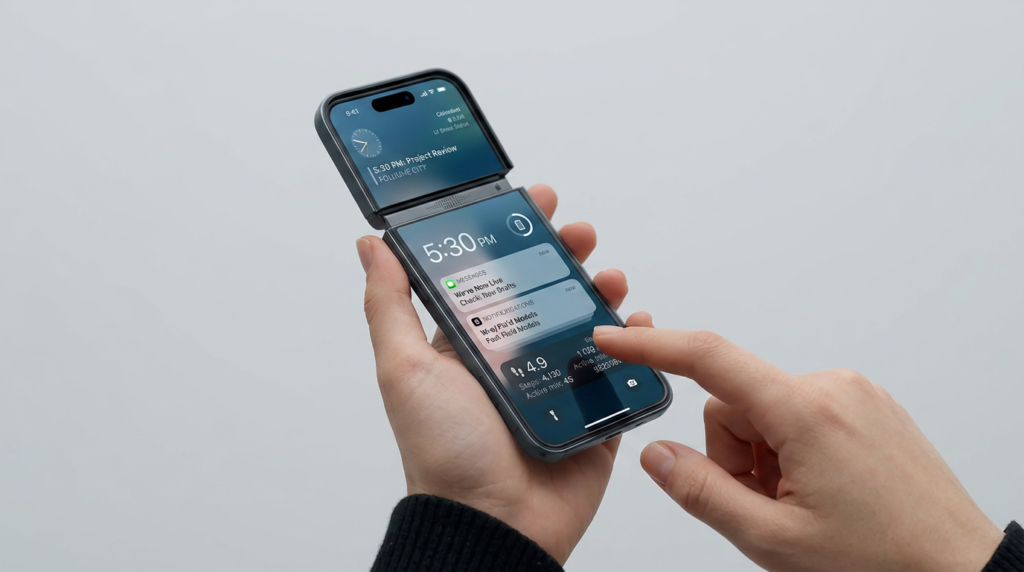
Step 3: Check your current phone’s actual condition and battery health. If your iPhone is already struggling to make it through a workday, you don’t need to wait for anything — replace it now and reassess the Apple foldable iPhone question next year.
Step 4: Set a real budget ceiling, not a wish number. Given the $2,000+ price chatter, decide now whether that’s genuinely within reach or whether you’re going to be uncomfortable making that payment. I’ve seen people finance a phone they resented three months later because the number didn’t feel real until the bill showed up.
Step 5: Wait for actual reviews, not day-one hype. This is the one people skip. First-generation Apple products (AirPods, Watch, Vision Pro) all had rough edges that got smoothed out by version two or three. I’d give this phone at least a couple of months of real-world reviews before trusting it with your money.
What My Foldable Experience Actually Taught Me
I want to share a few things nobody told me before I bought my Z Fold, because I think they’ll apply directly to anyone eyeing Apple’s version too.
The inner screen is genuinely great for multitasking, but I barely use split-screen the way I imagined I would. Most days I just use the bigger screen to read.
Cases matter more than you’d think. I skipped buying a case for the first month to “feel the phone as designed,” and I regret it — foldables pick up dust in the hinge area fast, and mine started making a faint grinding sound within weeks until I got a proper case.
Battery life on a foldable running two screens’ worth of pixels is noticeably worse than a slab phone with a similar battery capacity. If the Apple foldable iPhone follows the same physics (and it will, because physics doesn’t care whose logo is on the box), don’t expect miracle battery life just because Apple’s chips are efficient.
Repairs are expensive and slow. My Pixel Fold loaner needed a screen replacement quote once, and it was eye-watering compared to a normal phone repair. I’d expect the same, if not worse, for a first-gen foldable from Apple given how tightly the company tends to control repair parts.
Common Mistakes People Are Already Making
Assuming the name is confirmed. You’ll see “iPhone Fold” and “iPhone Ultra” used interchangeably across different articles, sometimes even “iPhone Ultra Fold.” None of that is official. Apple hasn’t confirmed a name, so don’t get attached to one.
Trusting exact release dates. September is the best guess, but “best guess” is doing a lot of work in that sentence. Hinge engineering has already caused reported timeline shifts once this year.
Assuming it’ll be crease-free just because Apple made it. Apple has a strong track record with hardware polish, but a completely invisible fold line is a genuinely hard engineering problem that every foldable maker is still chasing. Keep your expectations grounded until reviewers actually run their thumb across the screen.
Selling your current phone too early. If your friend group is anything like mine, someone always sells their phone the moment a rumor drops, then spends three months on a backup device waiting for a launch that keeps sliding. Wait for the actual keynote before you list anything on Swappa or Facebook Marketplace.
Ignoring app compatibility. Foldable-optimized apps still aren’t universal even on Android, which has had foldables for years. Don’t assume every app you use daily will look great stretched across a big square screen the day the Apple foldable iPhone ships — developers usually need real hardware in hand before they optimize properly.
Where I Land On This
I’m genuinely curious about the Apple foldable iPhone, more than I’ve been about an Apple launch in a while, because Apple tends to show up late to a category and then quietly fix the annoying stuff everyone else left broken. That’s basically what happened with wireless earbuds and smartwatches.
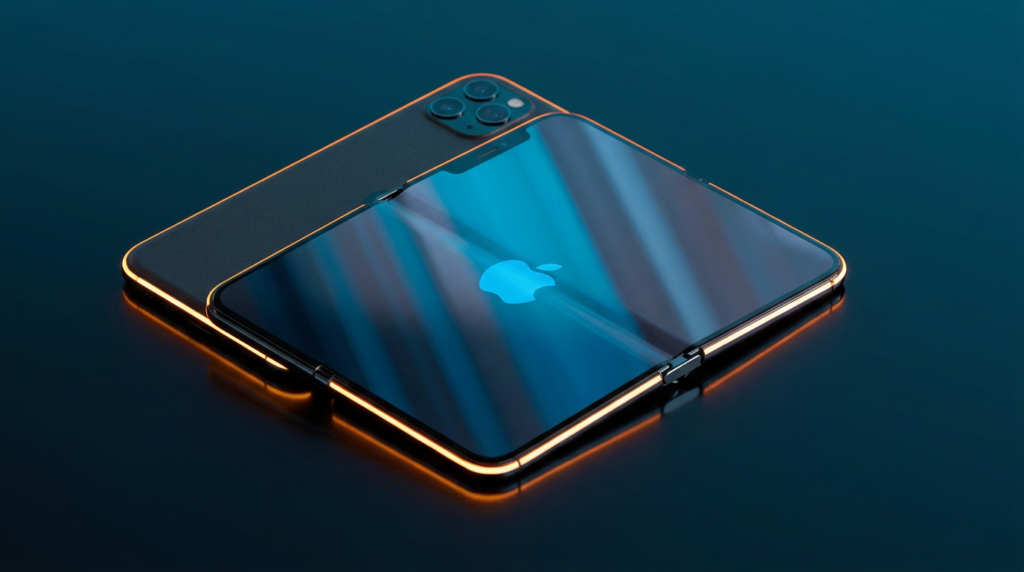
But I’ve also lived with a folding phone long enough to know the honeymoon period fades and the daily friction — the crease, the thickness, the battery drain, the repair anxiety — is what actually determines whether you keep using it a year later. If you’re on the fence, don’t buy based on rumors. Hold a current foldable in your hands, figure out if the format even fits how you use your phone, and then let the reviews on the actual Apple foldable iPhone tell you the rest once it’s real.
Until then, I’ll keep flipping open my Z Fold, feeling that little ridge under my thumb, and wondering if Apple’s engineers are quietly laughing at how much money the rest of us have already spent finding out what doesn’t quite work yet.
While we wait to see how Apple handles software and processing on a folding screen, if you’re exploring other smart tech and AI tools in the meantime, you should definitely check out this guide on ChatGPT vs Claude Prompt Improver to see how modern device intelligence is evolving.
Also Read: Best Weather Apps for iPhone
Also Read: iPhone 18 Pro Max Colors
Also Read: Cool Free Games for iPhone